I know that the purpose of this Blog is to share materials and resources to teach, to inform, to entertain, all about the English language.
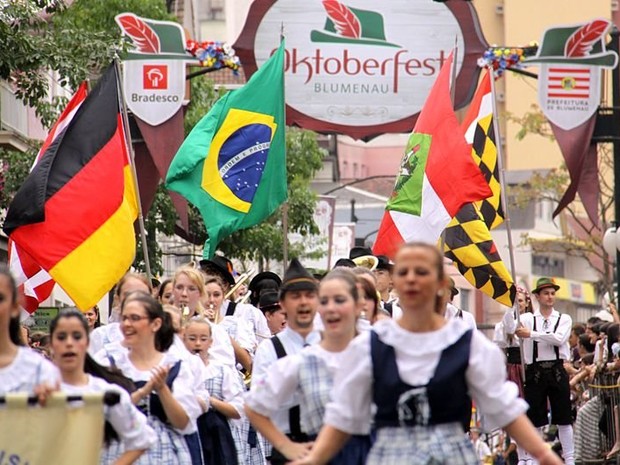
But during the Oktoberfest, the Blumenauenses show their cultural richness, through their love of music, dance, costumes, local cuisine and beer, maintaining the customs of their ancestors from Germany. And because all of that interests most of you, here are the most used expressions that you are going to hear in German and their equivalents in Portuguese.
PORTUGUÊS
ALEMÃO
Um brinde!
Ein prosit!
Pra lá e pra cá
Zick-zack
Um, dois, beber
Ein, zwei, g’sufa
Brindar com os canecos
Krüge Anstossen
Caneco
Krug
Tudo bem?
Alles gut?
Tudo azul
Alles blau
Oi
Hallo
Obrigado
Danke
Quanto custa?
Wie viel kostet?
Quer dançar?
Möchtest du tanzen?
Beijo
Küssen
Eu te amo
Ich liebe dich
Banda
Kapelle
Cantar
Singen
Amigo
Freund
Praça da criança
Kinderplatz
Now, it’s your turn to find out the equivalents in English, okay? 😉
Many students have difficulty with these two words: where and were (past of the verb to be). They get confused about the pronunciations. Listen to these two videos and practice.
Today we celebrate Teachers’ Day in Brazil. It’s a day to express our appreciation of the work and dedication of teachers. Consequently, it’s a day in which the focus of interestand debate should be on learning and education.
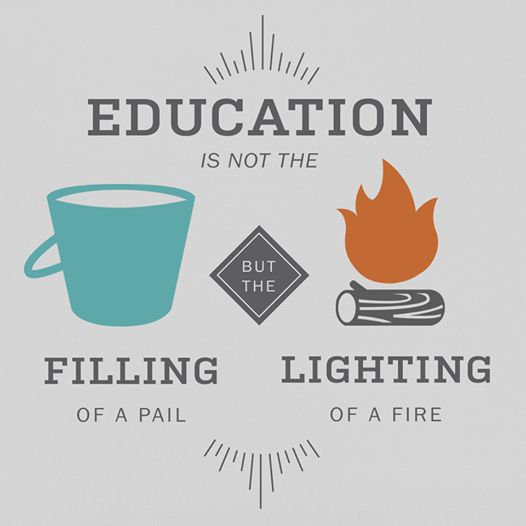
I basically keep two things in mind throughout my work:
The student is not a bucket.
I want to give the students the resources for them to think about their issues, understand them and find the answer by themselves. I want them to think for themselves. Hehe…
Although it is difficult to swim against the current, we do find support along the way. The Pink Floyd song, Another Brick in the Wall, back in 1979, already said that!
Roger Waters wrote this song about his views on formal education. He hated his grammar school teachers and felt they were more interested in keeping the kids quiet than teaching them. The bricks in the wall were the events in Water’s life which propelled him to build this wall around him, and his school teacher was another brick in the wall. The song is meant to be satirical. Waters explained: “You couldn’t find anybody in the world more pro-education than me. But the education I went through in boys’ grammar school in the ‘50s was very controlling and demanded rebellion. The song is meant to be a rebellion against the government, against people who have power over you, who are wrong. Then it absolutely demanded that you rebel against that.”
Don’t miss it! Learn and practice the lyrics here!
While you might not expect to find one of the world’s largest Oktoberfests in Brazil, the former German colony of Blumenau in Santa Catarina state, rivals Munich as much for its authenticity as it does for the passion of its celebrations!
Founded in 1984, the 18-day Blumenau Oktoberfest is a culturally-rich blend of folklore and tradition, and gives locals and tourists alike the chance to fully immerse themselves in a wide range of carefully preserved German customs — including of course, bratwursts and beer!
And because I haven’t found any video of Blumenau Oktoberfest in English, here is one from Conner Sullivan, a Youtuber, who visits Oktoberfest in Munich, where the World’s Largest festival happens.
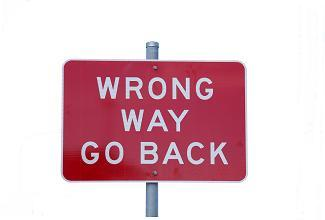
Go back, come back or get back? English learners often get confused about this. So here it goes!
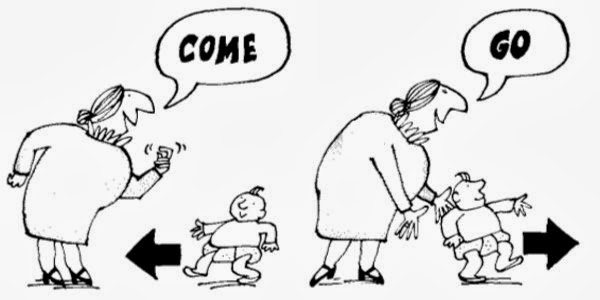
come and go
We use “come” for movements to the place where the speaker or hearer is:
Maria, would you come here, please?
We use “go” for movements to other places:
I want to go and live in Greece.
Now, when what we mean is “to return”, although we can use the word “return”, it is not usually the first choice of a native speaker. The phrasal verbs go back, come back and get back (meaning movement), are a lot more used.
First watch this video:
Então… O que deve ser considerado, é onde se encontra a pessoa que está falando. Portanto, revisando:
go back
Phrasal verb composto pelo verbo to go (ir) e, o advérbio back, muito usado nos contextos em que o que se quer dizer é: voltar ou estar de volta.
Aqui falamos em voltar, retornar, para um lugar fora ou longe de onde estamos no momento da fala. Veja:
I want to go back to Thailand one day, it was so beautiful.
Did you ever go back to that Japanese restaurant? The food was delicious!
I can’t go back to that bar, the music was terrible.
Note que usamos a preposição to com go back, assim como com come back e get back.
come back
Phrasal verb composto pelo verbo to come (vir) e novamente, o advérbio back. Aqui, estamos falando de voltar ao local onde nos encontramos no momento da fala.
I just came back from my vacation in Spain, I had a great time.
Yesterday I went home for lunch and came back to work a little late.*
*Lembrando que com a palavra home não usamos preposições: I went to my home.
I lived in Rio de Janeiro for three years, but came back to São Paulo because I missed my family.
You have been on vacation for such a long time, when are you coming back?*
*Aqui usamos o present continuous (to be + gerúndio) com sentido do futuro, algo muito comum em inglês. When will you come back também é correto mas menos natural.
I always come back from the gym feeling so energized, it helps me work more productively.
Note que com o phrasal verb to come back, podemos usar a proposição to quando estamos usando o lugar onde estamos como objeto, ou from quando estamos usando o lugar de onde viemos como objeto.
get back
É sinônimo do phrasal verb to come back, e é bastante usado na língua falada informal. Lembrando que este verbo é usado para se referir ao retorno ao local onde você estava antes. Let’s have a look!
If you get back in time, you can come with us.
When we got back to the hotel, Ann had already left.
Igot back from my vacation very late last night, I’m so tired!
When will you get back from work tonight? I’ll make dinner if it’s not too late.
I leave for Cabo Frio on Saturday and get back Tuesday. *
*Usamos o present simples com sentido de futuro quando algo está arranjado, planejado ou com data fixa.
get back to
Aside from being connected with movement, this idiom is used in some other contexts.
1 to return to (a place) after going away
We got back to the office in the early afternoon.
2 to return to (an activity, condition, etc.)
Things are finally getting back to normal.
Let’s get back to the topic we were discussing yesterday.
3 to talk to or write to (someone) at a later time in order to give more information, answer a question, etc.
He got back to me (by e-mail) in a few days with a new offer.
“How much will it cost?” “I’m not sure. I’ll have to get back to you on that.”
4 to call (someone) back on the telephone
“There’s someone on the phone for you, sir.” “Tell them I can’t take their call now but I’ll get back to them as soon as I can.”
Okay! Did you enjoy all learning that? So…
My thanks to my diligent student Afonso for sharing the results of his research on go back and come back with us! 😉