How to respond to “THANK YOU” in English

We all know that it’s polite to say “Thank you” to someone after they’ve done something good or helpful.

And as you learn words like “please,” “thank you,” “sorry,” and “excuse me,” mastering your manners in English can really help you sound more natural. If you don’t use these expressions in certain situations, it can even sound like you’re not really speaking English at all! That’s what my experience with the language has shown me!

So, if someone thanks you for something, what can you say in reply?


1. “You’re welcome” — the classic reply

“You’re welcome” is the most common response. There’s absolutely nothing wrong with using it. It’s the standard, polite reply, and in many cases, it comes out automatically.

But because it’s so common, it can feel a bit overused.
That’s why it’s essential to expand your vocabulary and learn other ways to respond—each with slightly different meanings or levels of formality.


2. Good manners in English

If you want to sound more natural or native-like, you’ll often use variations of “you’re welcome” instead of the phrase itself.

Below is a short skit that shows different ways people reply to “thank you.”
👉 Try watching it first without English subtitles, focusing on pronunciation.
Then watch it again with subtitles if you need support.

Do the same with all four videos in this lesson.


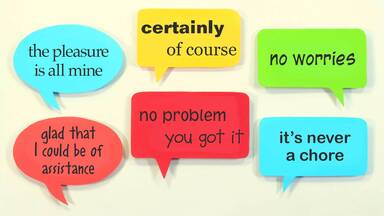
3. Useful expressions to respond to “THANK YOU”

Neutral

  • You’re welcome.

More formal

  • You’re quite welcome.
  • You’re very welcome.
  • You’re so welcome.
  • You’re truly welcome.

Informal

  • Don’t mention it.
  • No worries.
  • Don’t worry about it.
  • It was no problem.
  • Not a problem.
  • No problem.
  • No prob! (slang)
  • Sure.
  • Sure, no worries.
  • Sure thing.
  • Sure, anytime.
  • It was nothing.
  • It’s nothing.
  • Anytime!

Professional or social situations

  • The pleasure is mine.
  • It’s my pleasure.
  • It was my pleasure.
  • With pleasure.
  • My pleasure.
  • Pleasure.
  • I’m happy I could help.
  • I’m happy to help.
  • I’m glad to help.
  • Happy to help.

👉 Watch the last two responses from Bob in the video below.


4. Quiz

The following material includes a short quiz so you can practice the expressions you’ve just learned.


5. And one more thing!

Next time you thank someone, don’t be surprised if they reply:
👉 “Thank YOU!”

This means that not only did you benefit from the situation, but they also feel that you helped them in some way.


VERB TENSES

12 Verb Tenses in English Explained - Grammar

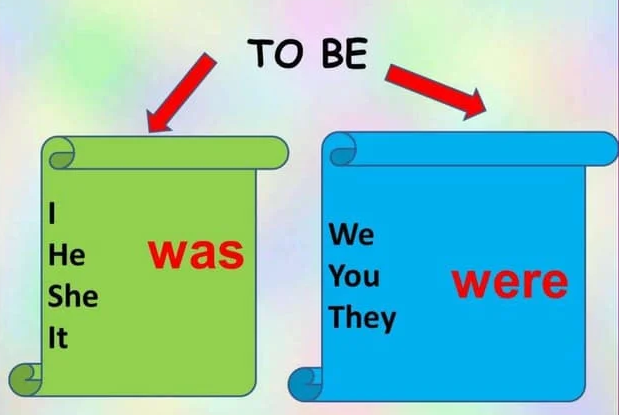
1. Verb to be (am / is / are – was / were)

Use: to describe people, things, places, time, emotions.

Examples:

  • I’m tired today.
  • She was at the gym yesterday.
  • They are friends.

✏️ Exercises:

  1. Complete with am, is, are, was or were:
    a) I ___ at home right now.
    b) She ___ a teacher.
    c) We ___ in Paris last summer.
    d) You ___ very kind!
    e) It ___ rainy yesterday.
  2. Make the sentences negative:
    a) He is my brother. →
    b) They were late. →
    c) I’m happy. →
  3. Make questions:
    a) She is from Brazil. →
    b) You were at the party. →

2. Simple Present

Use: habits, routines, general truths.
Structure: subject + base verb (+s/es in 3rd person)

Examples:

  • I study English every day.
  • She goes to the gym on Mondays.
  • The sun rises in the east.

✏️ Exercises:

  1. Complete:
    a) He ___ (play) soccer every weekend.
    b) I ___ (not like) coffee.
    c) ___ you ___ (work) on Saturdays?
  2. Write/say 3 sentences about your daily routine.
  3. Correct the mistakes:
    a) She go to school by bus.
    b) Do he like pizza?
    c) They doesn’t live here.

3. Simple Past

Use: finished actions in the past.
Structure: subject + past form of verb (regular: +ed / irregular: 2nd column)

Examples:

  • I visited my grandparents yesterday.
  • They went to the beach last weekend.

✏️ Exercises:

  1. Complete:
    a) We ___ (watch) a movie last night.
    b) She ___ (go) to bed late.
    c) I ___ (not see) him yesterday.
    d) ___ you ___ (study) for the test?
  2. Transform to negative:
    a) He worked on Sunday. →
    b) They met their friends. →
  3. Write 3 sentences about what you did last weekend.

4. Present Perfect

Use: experiences, recent events, unfinished time.
Structure: have/has + past participle

Examples:

  • I have been to London.
  • She has finished her homework.
  • We haven’t seen that movie yet.

✏️ Exercises:

  1. Complete:
    a) I ___ (never / eat) sushi.
    b) She ___ (just / call) you.
    c) They ___ (not / visit) New York.
    d) ___ you ever ___ (try) surfing?
  2. Rewrite in present perfect:
    a) I saw this movie. →
    b) She finished her project. →

5. Present Continuous

Use: actions happening now or around now.
Structure: am/is/are + verb + ing

Examples:

  • I’m studying English.
  • She is cooking dinner.
  • They are not working today.

✏️ Exercises:

  1. Complete:
    a) I ___ (read) a book now.
    b) She ___ (not / sleep).
    c) ___ they ___ (watch) TV?
  2. Choose the correct option:
    a) Listen! The birds (sing / are singing).
    b) We (study / are studying) for the test now.
  3. Write 3 sentences about what people in your family are doing right now.

6. Going to – future plans and intentions

Use: plans already decided or clear intentions.
Structure: am/is/are + going to + verb

Examples:

  • I’m going to travel next month.
  • They’re going to buy a new car.

✏️ Exercises:

  1. Complete:
    a) We ___ (visit) Grandma tomorrow.
    b) She ___ (not / study) tonight.
    c) ___ you ___ (take) the test again?
  2. Write 3 sentences about what you’re going to do this weekend.

7. Will – predictions, promises, spontaneous decisions

Use:

  • Predictions: It will rain tomorrow.
  • Promises: I’ll help you.
  • Instant decisions: I’ll call her now!

✏️ Exercises:

  1. Complete:
    a) I think it ___ (rain) tonight.
    b) Don’t worry, I ___ (help) you.
    c) She ___ (not / be) late.
  2. Make sentences using “will” for:
    a) a promise
    b) a prediction
    c) a quick decision

✏️ 8. Mixed Practice

Complete with the correct tense of the verb in parentheses:

  1. I ___ (be) very tired yesterday.
  2. She ___ (study) English every day.
  3. They ___ (just / arrive).
  4. We ___ (go) to the park tomorrow.
  5. Look! It ___ (rain)!
  6. I ___ (not see) him since last year.
  7. He ___ (be) a teacher for 10 years.
  8. Don’t worry — I ___ (help) you with your homework.
  9. She ___ (watch) TV now.
  10. ___ you ___ (ever / travel) abroad?

🗣️ 9. Personal Practice (Speaking or Writing)

Answer in complete sentences:

  1. Where are you from?
  2. What do you usually do on Sundays?
  3. What did you do yesterday?
  4. Have you ever eaten something exotic?
  5. What are you doing right now?
  6. What are you going to do next weekend?
  7. What will you do if it rains tomorrow?

🌀 Mixed Practice – Level up!

A. Complete the sentences with the correct verb form.

  1. I ______ (be) tired yesterday, but I ______ (feel) great today.
  2. She ______ (not / see) that movie yet.
  3. Look! It ______ (snow)!
  4. We ______ (go) to the beach every summer.
  5. They ______ (not / be) at school last Friday.
  6. I think it ______ (rain) tonight.
  7. He ______ (study) English for three years.
  8. We ______ (go) to travel to Canada next year.
  9. I ______ (not / have) breakfast this morning.
  10. Where ______ you (be) at 9 a.m.?

B. Rewrite the sentences as requested.

  1. She goes to work by bus. (make negative) →
  2. They watched a movie last night. (make a question) →
  3. I’ve been to Italy. (make negative) →
  4. He’s cooking dinner. (change to simple present) →
  5. I’m going to call my friend. (change to will) →

C. Choose the correct answer.

  1. I ____ my keys. Can you help me find them?
    a) lost b) have lost c) lose
  2. She ____ TV when the phone rang.
    a) watches b) was watching c) has watched
  3. We ____ in this city since 2010.
    a) live b) lived c) have lived
  4. Don’t worry! I ____ you with that.
    a) help b) am helping c) will help
  5. What ____ you ____ tonight?
    a) do / do b) are / doing c) did / do

D. Fill in with your own ideas (personal answers).

  1. I’m really happy because I’m ______.
  2. Yesterday I ______.
  3. I have never ______.
  4. Next weekend I’m going to ______.
  5. I think I will ______ in the future.

E. Translate into English.

  1. Eu estava cansado, mas feliz.
  2. Ela nunca visitou Nova York.
  3. Está chovendo muito agora.
  4. Eles vão comprar um carro novo.
  5. Acho que vou dormir cedo hoje.

F. Challenge: Combine the tenses!

Write a short paragraph (5–6 sentences) that includes at least four different tenses.
Example:

I’m studying English because I’ve always loved languages. I started when I was ten. My teacher is amazing! Next year, I’m going to take an exam, and I’m sure I’ll pass it.

Greetings and Goodbyes in English

🗣️ Greeting People

We usually greet people with “hi” or “hello.”
👉 “Hi” is a bit more casual.

Examples:

  • Hello!
  • Hi!
  • Hey!

It’s common to say “hey” in informal situations.
Be aware that “hey” can also be used to get someone’s attention, like:

Hey, look at this!


😊 Asking How Someone Is

Common ways to ask how someone is doing:

  • How are you?
  • How are you doing?
  • How’s it going?
  • How have you been?

All these questions have similar meanings.


👍 Common Replies

  • I’m fine, thanks.
  • I’m good, thanks.
  • I’m great, thanks!
  • Pretty good!
  • Not bad, thanks.

👉 Many people say “not bad” to mean “quite good.”


👋 Informal Greetings Among Friends

If you’re greeting a friend or someone you know well, you can say:

  • Hey, what’s up?
  • What’s new?
  • What’s happening?
  • What’s going on?

Typical short replies:

  • Nothing.
  • Not much.
  • Nothing much.

💡 In English-speaking cultures, people usually don’t share a lot of personal information during a short, informal, or accidental meeting.


🎧 Listening Practice

Listen carefully to the two videos below.
Take notes of useful phrases and sentences, and pay special attention to pronunciation.


🌞 Other Everyday Greetings

  • How’s everything?
  • Long time no see. Hey, long time no see!
  • How’s your day?
  • Good morning / Good afternoon / Good evening

👉 To make “Good morning” less formal, just say “Morning.”

If you’re leaving or going to sleep, you can also say “Good night.”


🚪 Saying Goodbye

  • Bye! → (short for “Goodbye”)
  • See ya / See you soon / Hope to see you soon Used when you plan to meet the person again soon.
  • Take it easy / Take care / Take care of yourself. These phrases are informal, polite, and friendly ways to say goodbye, wishing the other person well.

Health problems

🧠 Vocabulary Review

Common health problems:

  • a cold
  • a fever
  • a headache
  • a stomachache
  • a sore throat
  • the flu
  • allergies
  • a cough

👂 Asking About Someone’s Health

Here are the most common ways to ask how someone feels:

  • How do you feel (today)?
    → Como você está se sentindo (hoje)?
  • How are you feeling?
    → Como você está se sentindo?
  • Is everything okay?
    → Está tudo bem?

🗣️ Typical Responses

When someone asks how you’re feeling, you can respond:

  • I’m fine.
    → Estou bem.
  • I feel sick.
    → Estou me sentindo mal.
  • Not so good.
    → Não muito bem.
  • Not very well.
    → Não estou muito bem.
  • I don’t feel well.
    → Não estou me sentindo bem.
  • I’m sick.
    → Estou doente.

🔍 Asking for More Details

When you see (or hear) someone isn’t feeling well, you can ask:

  • What’s the matter?
    → O que houve?
  • What’s wrong?
    → O que aconteceu?

🧾 Describing What’s Wrong

To say what’s wrong with you:

  • I have + [health condition].
    → I have a headache.
    → I have the flu.
  • I’ve got + [health condition]. (more common in British English)
    → I’ve got a sore throat.
    → I’ve got a runny nose.

(Both forms are correct and mean the same thing.)

Practice Activity

1. Fill in the Blanks

Complete the responses.

a) How are you feeling?
→ __________________________ (not good)

b) What’s the matter?
→ __________________________ (headache)

c) Is everything okay?
→ __________________________ (not well, sore throat)


2. Role Play

Create a short dialogue:

A: Hi! You don’t look so good. What’s wrong?
B: __________________________
A: I’m sorry. Do you need anything?

Practice using the questions and responses from the lesson.


3. Correct the Mistake

a) I am with fever.
→ ________________________

b) She have a sore throat.
→ ________________________

c) He has got cough.
→ ________________________


4. Dialogue

Discuss the following questions:

  • Do you ever get headaches?
  • How often do you catch a cold?


🏁 Wrap Up

  • Go back to your symptom list from the video.
  • Share one health problem you’ve had before and how you treated it.

The Many Uses of Kind, Sort, and Type

Kinda sorta

In English, there are two main ways to use these words:

  1. To talk about categories or groups of things.
  2. To express uncertainty or approximation — but only with kind and sort (not type).

Watch the video below to see these expressions in action! It explains when to use kind of, sort of, and type of, and show you how kinda and sorta sound in real-life English. It’s short, clear, and full of examples you can start using right away.

1. KIND OF, SORT OF, TYPE OF — Categories or Groups

We use these expressions to describe types, kinds, or categories of things.
They always come with the preposition of.

Examples:

  1. What type of music do you like?
    (Que tipo de música você gosta?)
  2. What are the different kinds of spices in this cake?
    (Quais são os diferentes tipos de condimentos desse bolo?)
  3. That magazine prints fake news and all sorts of other rubbish.
    (Aquela revista publica notícias falsas e todo tipo de besteira.)

💡 Tip:
In everyday English, kind of and sort of are often used interchangeably, but type of sounds a little more formal.


2. KINDA & SORTA — Expressing Uncertainty or Softening Statements

When spoken quickly, kind of and sort of often become kinda and sorta.
They can mean a little, more or less, or sort of in Portuguese (“um pouco”, “meio”, “mais ou menos”).

Examples:

  1. Mm, I’m kinda cold. Could you please close the window?
    (Estou com um pouquinho de frio. Você poderia fechar a janela?)
  2. Do you like tomatoes? — Mm, sorta.
    (Você gosta de tomates? — Mais ou menos.)

They are also used to soften opinions — when you’re unsure or want to sound polite:

It’s kinda expensive. → (É meio caro.)
She’s sorta shy. → (Ela é meio tímida.)


3. “KINDA-SORTA” — Modern, Playful English

This fun combination — kinda-sorta — is common in casual, spoken English, especially among younger speakers.
It can mean:

  1. A little
  2. A lot (ironically)
  3. Indecision
  4. Laziness or hesitation

Examples:

  1. Who is that actor?
    Oh, he used to be kinda-sorta famous back in the 90s.
    (Ele costumava ser um pouco famoso nos anos 90.)
  2. How’s my writing paper?
    Um… it still kinda-sorta needs some work.
    (Ainda precisa de muitas melhoras.)
  3. So, are you guys, like, together?
    Well, we’re kinda-sorta boyfriend/girlfriend.
    (Bem, somos meio que namorados.)
  4. Do you wanna go out tonight?
    Mm… kinda-sorta, not really, maybe, but yeah, okay.
    (Mais ou menos, não muito, talvez, mas tá, ok.)

🧠 Practice Time

Exercise 1 — Fill in the blanks

Complete with kind of, sort of, or type of.

  1. What _______ job are you looking for?
  2. It’s _______ cold today, isn’t it?
  3. I don’t really like that _______ music.
  4. I’m _______ tired, but I’ll help you.
  5. What _______ food do they serve there?

Exercise 2 — Choose the correct option

  1. She’s _______ shy.
    a) type of  b) kinda  c) sort
  2. What _______ chocolate do you prefer — dark or milk?
    a) kind of  b) sorta  c) kinda-sorta
  3. He’s _______ funny, but not always.
    a) type  b) kinda  c) of kind
  4. They have all _______ of fruit juices here.
    a) sorts  b) kind  c) sorta

Exercise 3 — Express yourself!

Translate and complete these sentences using kind of, sort of, type of, or kinda-sorta.

  1. Eu estou meio cansado hoje.
    → I’m ______________________ today.
  2. Que tipo de filme você gosta?
    → What ______________________ do you like?
  3. Ele é meio estranho, mas simpático.
    → He’s ______________________ weird but nice.
  4. Ela é meio que minha melhor amiga.
    → She’s ______________________ my best friend.

Answer Key:

Exercise 1: 1. kind of / 2. kinda / 3. kind of / 4. kinda / 5. type of
Exercise 2: 1. b / 2. a / 3. b / 4. a
Exercise 3: (open answers)


💬 Reflection Question

In what situations do you use kind, sort, or type in your daily life?
Share your example in the comments! 👇