
Are you going to play Secret Santa?

Secret-santa-1

Estamos chegando perto do Natal, quando ocorre aquela tradicional brincadeira de final de Ano conhecida como ‘amigo secreto‘ ou ‘amigo oculto‘, comum entre familiares, grupos de amigos, colegas de trabalho ou de escolas.

Você já se perguntou como dizer ‘amigo secreto‘ ou ‘amigo oculto‘ em inglês? Se disser algo como ‘secret friend‘, ou ‘hidden friend‘ com certeza você terá que explicar o que quis dizer com isso. Pois, a expressão mais utilizada, principalmente nos Estados Unidos, e que equivale ao nosso ‘amigo secreto‘ é ‘secret Santa‘. Mas também ouve-se em alguns locais ‘Kris Kringle‘. Veja abaixo alguns exemplos:

  • Are we going to play Secret Santa this year? Nós vamos fazer Amigo Secreto este ano?
  • What did you get for your Secret Santa? O que você comprou pro seu Amigo Secreto?
  • Who’s your Secret Santa? Quem você pegou de Amigo Secreto?
  • I got the same Secret Santa three years in a row. Eu peguei o mesmo Amigo Secreto três anos seguidos.
  • I don’t know what to get her for Secret Santa. Eu não sei o que dar para ela de Amigo Secreto.

Lembrando que em todos os exemplos acima podemos trocar ‘Secret Santa‘ por ‘Kris Kringle‘.

Como última curiosidade, nos Estados Unidos ‘Kris Kringle‘ também significa ‘Papai Noel‘ assim como ‘Santa Claus‘. E no Reino Unido ‘Father Christmas‘ é o termo mais usado.

Aproveito ainda para dizer que se você quiser dar um ‘vale presente‘ para o seu ‘Secret Santa‘ você dirá em inglês ‘gift certificate‘ (American English), ou ‘gift voucher‘/ ‘gift token‘ (British English).

That’s about it for today!

Amanhã faremos exercícios para treinar o vocabulário de natal.

See ya!

Based on Ricardo Leal  

https://blog.influx.com.br/2009/12/22/como-dizer-amigo-secreto-em-ingles/#.VIrzcXsmHrM

“It doesn’t make sense!”

It doesn't make sense

Não faz sentido deixar ir algo que você teve por tanto tempo. Mas também não faz sentido manter/segurar, quando na verdade não há nada.

A frase inglesa sense of humor é facilmente entendida até por brasileiros que não estudam inglês. Mas, é difícil inferir corretamente o significado das orações come to your senses e make somebody see sense. Você as compreende? Se não, leia com atenção.

Em inglês, sense dicas de inglês como pronunciar sense em ingles pode ser substantivo ou verbo. Como substantivo, sense significa juízo, bom senso, sensação.

Exemplos:
a) She has no sense at all.
(Ela não tem juízo algum.)

b) He felt a sense of betrayal.
(Ele tinha a sensação de ter sido traída.)

Como verbo, sense significa perceber, sentir ou pressentir como em He senses that something is wrong (Ele sente que algo está errado).

O que significa “make sense”?

Em inglês, make sense significa fazer sentido como em These instructions don’t make sense to me (Estas instruções não fazem sentido para mim).

Sense

Eu suponho que algum dia tudo fará sentido.

Mais expressões úteis com “sense”

Come to your senses – cair em si
In a sense – de certo modo
Make sense of something – entender algo
Make somebody see sense – chamar alguém à razão
Nonsense – contra-senso, absurdo, disparate – como em You’re talking nonsense! (Você está falando disparate!)
Sense of direction/time – noção de direção/das horas

Six-Senses-Koh-Yao-Noi-Thailands-best-luxury-hotel
Based on Frederico Vasconcelos: http://www.inglesnosupermercado.com.br/usos-de-sense-em-ingles-para-estudantes-que-tem-bom-senso/

Oktoberfest 2017! 10 Reasons to celebrate it here!

OKTOBERFEST 2017

1. The second largest Oktoberfest outside Germany

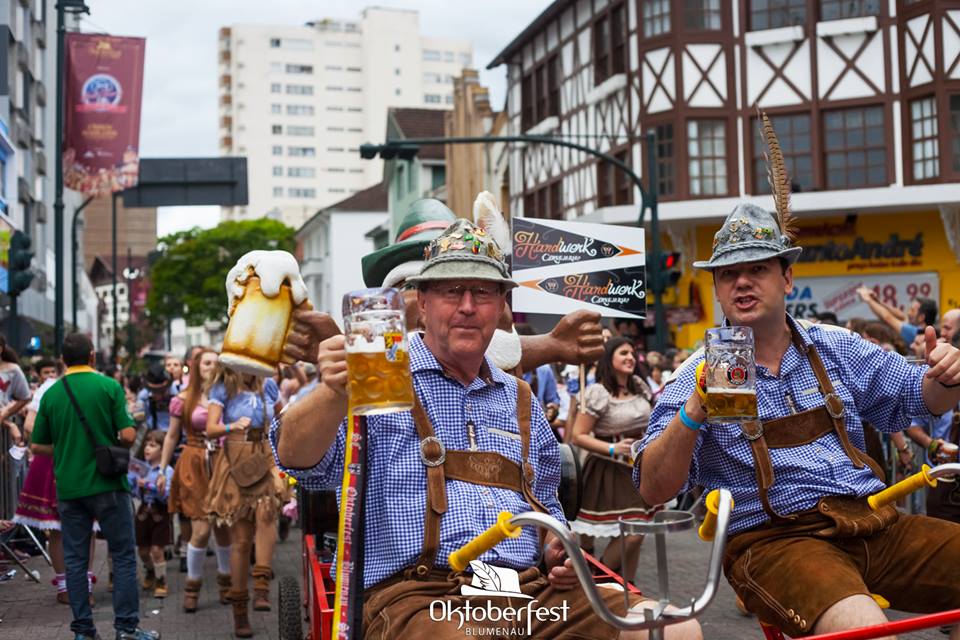
Blumenau hosts the world’s second largest Oktoberfest outside Germany! The Brazilian city of Blumenau hosted over 500,000 visitors to Oktoberfest in these last few years (the city has a population of almost 350,000) for 18 days of beer guzzling, dancing, singing, parades, fun, oh and some German culture with that Brazilian flair! It is a party not to be missed.

2. Location

Blumenau and Pomerode are situated in the European Valley in the state of Santa Catarina, Brazil. This area was named such due to the beautiful rolling green hills and land that was settled by Europeans mainly from Germany and Italy. The views are amazing. Imagine rolling green hills with quaint little German style farms and homes, near streams and rivers, cows grazing freely. The countryside here is absolutely beautiful!

3.  The most German city in Brazil

A short drive from Blumenau lies the small city of Pomerode. Pomerode is called the most German city in Brazil.  Most of this city’s inhabitants are bilingual in German and Portuguese.

Oktoberfest a

4.  The costumes

Brazilians love to dress up in costume! You can purchase your own traditional German costume at many of the areas gift shops. People who wear costumes to Oktoberfest get in half priced! The amount of people dressed up in German clothing just brings extra excitement and fun to the festivities. It puts everyone in the mood to have a great time!

5.  People watching

Brazil is home to some of the most beautiful people in the world, in part due to having so much ethnic diversity.

GERMANY-MUNICH-FESTIVAL-DRINK-LIFESTYLE-BEER-OKTOBERFEST

6. The food

With the large German immigrant community you are bound to have some quality German food. It is all available – schnitzel, sausages, spetztl, etc. The batata recheada – or stuffed potato – rules all at the Blumenau Oktoberfest.

Oktoberfest b

7.  The weather

The weather in Brazil in October is amazing. It is spring and it’s not too hot and not cold. The temperature runs between 69 and 85 degrees fahrenheit this time of year.

8.  The beaches

Blumenau is close proximity to some of the most beautiful beaches in the world! Where else can you party at one of the largest Oktoberfest’s in the world one day and lay out in your swimsuit at the beach the next?

Oktoberfest c

9.  The beer

You can enjoy Oktoberfest even if you are not a beer drinker. If you don’t like beer try some of the wines local to Brazil and the famous Brazilian cocktail the Caipirinha! For the non-drinkers out there, Brazil is known for having some of the best fresh juices in the world!

Oktoberfest d

10.  The parades

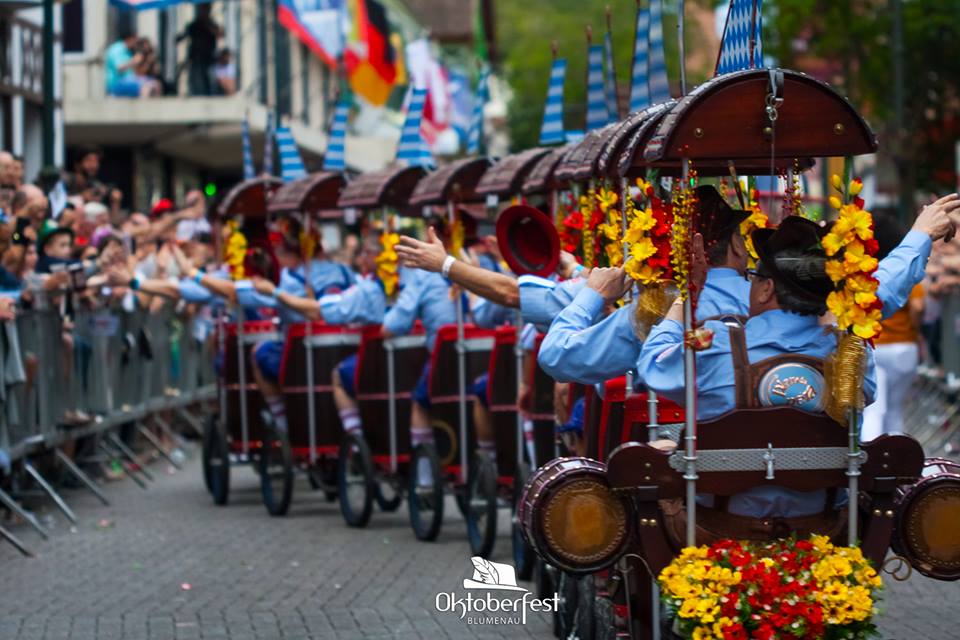
The Oktoberfest parade is full of beautiful dancing men and women, children, sleeping babies being pulled in wagons while parents enjoyed a few beers, bicycles, fun German themed floats, a giant pig float, marching bands, lively music pumped from speakers on the floats, folkloric groups, hunting and shooting clubs, Oktoberfest royalty, and the list goes on and on. Everyone goes to the parade, both young and old. The parade goers are also participants, singing and dancing along, cheering for the people in the procession. The parade occurs every Wednesday at 7:30p.m. and every Saturday at 4:00 p.m. in downtown Blumenau. Attending the parade is a must to get into the party mood!

Oktoberfest e

Based on http://elizabethanddaleabroad.com/2015/03/20/oktoberfest-brazilian-style/

See more at http://www.oktoberfestblumenau.com.br/en/

Is there more to life than being happy?

A good exercise to improve your listening skills and acquire new vocabulary! She speaks very clearly and you can see the language we’ve already learned in a context everybody is interested in!

Why don’t you print the transcript and give a closer look to it? Play the video with English subtitles first, work on the transcript and then turn them off to listen again!


“Lose” or “loose”!

O inglês é usado hoje sem dúvida como veículo de comunicação entre todos os países. Nas redes sociais, chats e por toda a internet nós nos deparamos com pessoas do mundo todo, e uma das razões dessa interação é que muita, mas muita gente mesmo, fala inglês. A disseminação da língua é favorável em muitos aspectos, temos mais acesso e maior volume de material de pesquisa.

E uma das coisas que podemos perceber com tantos falantes estrangeiros da língua é que as dificuldades são sempre as mesmas.

Ontem, falamos sobre a diferença entre “to miss” and “to lose“. E esta última, por sua vez, requer que agora esclareçamos  a confusão geralmente causada entre “lose” e “loose“.

A diferença na pronúncia é muito sutil, veja só: loose e lose (clique sobre cada uma para ouvir a pronúncia). A palavra “loose”é pronunciada /lus/ (com som de “s” no final) e a palavra “lose” é pronunciada /luz/ (com som de “z” no final). Porém o significado muda muito. Um dos significados de “loose” é “frouxo“.

Loose-img1

Some of the shingles on the roof were loose. [Algumas telhas no telhado estavam frouxas.]

The rope was tied in a loose knot. [A corda estava amarrada com um nó frouxo.]

She was wearing a loose dress. [Ela estava usando um vestido frouxo.]

He was punched in the face and got a loose tooth. [Ele levou um soco na cara e ficou com um dente frouxo.]

Já “lose” é um verbo, cujo significado é “perder“.

She’s always losing her gloves. [Ela está sempre perdendo suas luvas.]

Hold my hand: I don’t want to lose you. [Segure minha mão: eu não quero te perder.]

We lost the game by a score of 4-2. [Nós perdemos o jogo por um placar de 4 a 2.]

He hates to lose when money is involved. [Ele odeia perder quando tem dinheiro envolvido.]

Win lose

Baseado em Livia Bueno