If you don’t look well – you should see a doctor / go to your doctor. And for that, you may need to make an appointment with your doctor.
The two expressions see a doctor and go to the doctor can be used to indicate a need to consult a doctor, that is, to obtain medical advice and any necessary treatment.
Now let’s look at a simpleconversation between doctor and patient. This is an interactive listening and speaking practice. Please listen and then repeat after Mark. Have fun learning to talk with a doctor and speak English now.
How are you feeling today?
Not very well, Doctor.
Tell me about it.
Well, I have a terrible headache.
How about your throat?
It hurts a little.
Do you have a cough?
Yes, I have a cough, too.
Do you feel weak?
Yes, I get tired very quickly.
Let’s take your temperature.
Your temperature is 39.1 degrees Celsius.
You have a fever.
It seems the you have the flu.
Oh, that’s terrible.
Don’t worry.
Take this medicine and rest.
OK. I understand.
Please come back next week for a checkup.
I will.
Thank you Doctor.
Find a few more useful sentences below. Listen carefully and write them down.
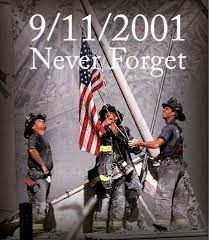
We have recently learned how to use the words birthday and anniversary. This lesson shows the noun anniversary used to talk about the 20th anniversary of the September 11 tragedy. Note that the ordinal number indicating the number of years precedes the word anniversary.
The attack remains one of the most traumatic events of the century, not only for Americans but also for the world.
Around the US, every year, people pause to remember those who lost their lives on the anniversary of the 9/11 attacks, vowing to “never forget.”
“9/11” is shorthand for the date, September 11, 2001. On that date, four airplanes were hijacked or taken over by 19 terrorists, part of the terrorist group called “al-Qaeda,” and used as giant, guided missiles to crash into landmark buildings in New York and Washington. Two planes struck the Twin Towers of the World Trade Center in New York. As people rushed out of the towers, many rushed in to help, including firefighters and police officers, who saved thousands of lives.
Almost 3,000 people died, and thousands were injured or later developed illnesses connected to the attacks, including firefighters who had worked in toxic debris. Citizens of 77 different countries were among the casualties.
The third plane destroyed the western face of the Pentagon – the giant headquarters of the US military just outside the nation’s capital, Washington DC.
And the fourth plane crashed in a field in Pennsylvania after passengers fought back. There is speculation that the hijackers had meant to attack the Capitol Building in Washington DC.
All 246 passengers and crew aboard the four planes were killed
At the Twin Towers, 2,606 people died – then or later of injuries
At the Pentagon, 125 people were killed
Around 17,000 people were in the buildings when they were hit by the planes. Most of them left safely. As they rushed out, firemen, police officers, and other volunteers rushed in to help those still trapped. We call these heroes “first responders”. The buildings were very damaged, though, and before the first responders could help everyone, they collapsed.
On the one hand, the world witnessed the searing destructiveness of naked hate that day; on the other hand saw many performing incredible acts of heroism, sympathy, and gratitude.
People came from all over the world to help. Some came to help the injured. Some came to help clean up the site. Others brought food and support messages for the workers. Many people worked around the clock(all day and all night without stopping) to clear the rubble and the debris, and eight months later, the last of the steel was removed.
To help us remember, a permanent 9/11 Memorial and a Museum were opened at the site of the original World Trade Center on the 10th anniversary of the attacks. Together, they remind us what happened that day and help us remember all the people who lost their lives. They also let us remember the importance of helping each other and making our community and world a better place.
PRACTICE
What does the word “hero” mean to you? Do you think of someone with superhuman strength or someone you know?
What makes a hero?
How can we show support and gratitude to those who act heroically or are absolutely and genuinely committed to the well-being of our community, country, or the world?
Start by watching the video to listen to the introductory explanation. Pause it, finish reading the post, and then go back to the exercises in the video.
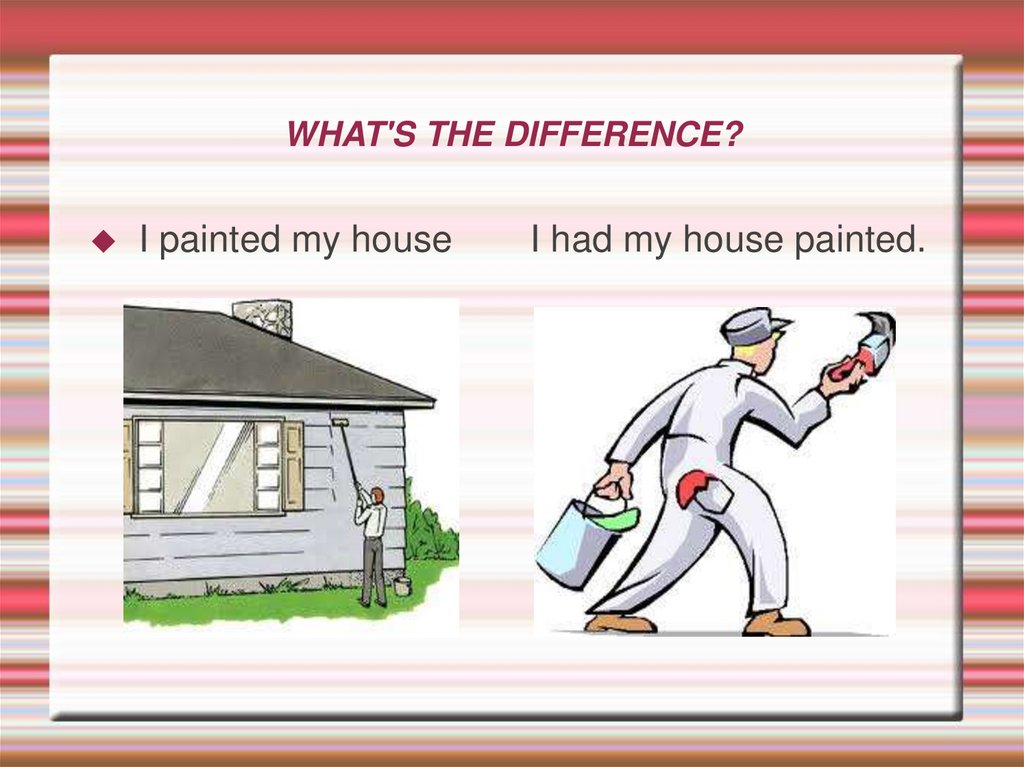
Have/get + object + past participle
We use this structure, the Passive Causative form, to talk about services that we receive, about things which we don’t do by ourselves but someone else does for us.
I had/got my hair cut.
I got/had my car repaired.
I am going to have/get my house painted.
If you’re doing the action, you can simply use “cut”:
I cut my hair.
When someone cuts your hair for you, you have/get a haircut,
He got a haircut and did/ran other errands during the lunch hours.
I was planning to finish work early today, get a haircut, and maybe do some shopping.
Oatmeal (mingau de aveia) can be the most comforting and fulfilling breakfast, lunch, or dinner. A student was having (eating) a bowl of oatmeal during the class (online classes allow for that), and I asked her to share heroatmeal recipewith me. Then, she started listing the ingredients:
2 tablespoons of the oats (aveia)
She thought that she had to use “of the”, because of phrases like the end of the day, the cost of the meal, a member of the team, etc.
So I decided to prepare this lesson.
In this context, when we are listing the ingredientsof the recipe, OF is being used to show what type of substance or thing we are referring to when talking about the amount:
two kilos of sugar
millions of dollars
a bar of chocolate
There are many different oatmeal recipes, and the purpose of this lesson is not the recipe itself but to learn how to say it. Here is an easy one only to show you how the ingredients are listed. Notice the 1/2 cup of rolled oats.
Okay, now let’s look at some situations in which we use of the:
the end of the day
used to show what a part belongs to or comes from the back of the house the last scene of the movie
the cost of the meal
used when talking about a feature or quality that something has the beauty of the scenery the length of the swimming-pool
a member of the baseball team
used to show what group one or more things or people belong to some of the students ‘Mona Lisa’ is one of the best-known paintings. Two of the guests are vegetarian.
Now, here is a very common situation in which we use only of: a cup of coffee
used to say what something contains several packets of cigarettes truckloads of refugees
Okay! Let’s see what other ingredients my student adds to her oatmeal recipe, starting from the beginning:
Like and as are words commonly used in English for comparisons. Even though there are subtle differences between them, English speakers use them interchangeably. They are even sometimes misused.
The confusion in using like and as is first caused by translating them to Portuguese, because both of them mean “como”, one word only.
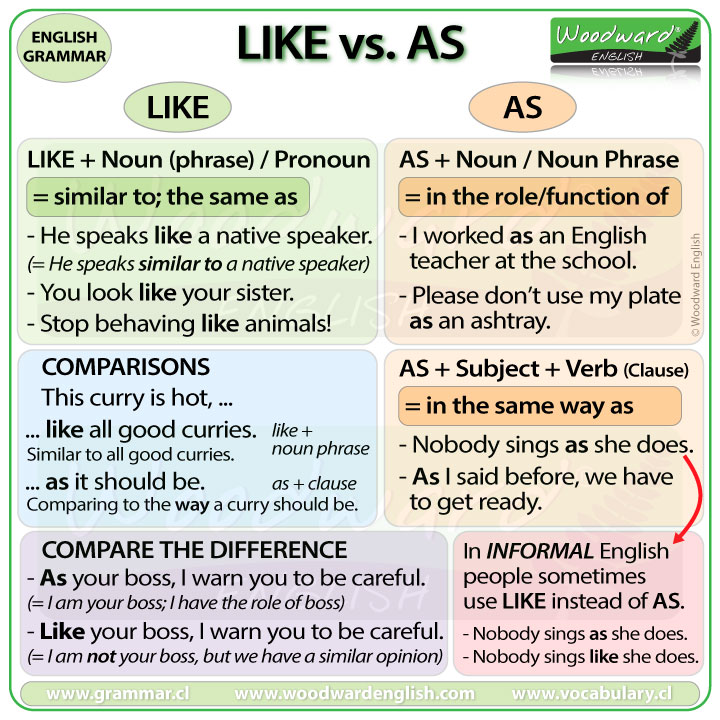
In formal writing, like is used as a preposition, telling location, direction, time or relationship between a noun or a pronoun and another word in a sentence. As is used as a conjunction,joining two clauses (groups of words that must include a subject and a verb), with the bonus that you have a comparison too.
But let me remind you that there are two ways of comparing:
‘more _____ than’ or ‘_____ than’ and ‘as _____ as,’compare qualities, speed, height, weight, cost, shape
‘like’ and ‘as’ compare thingsto things, actions to actions
When to use Like
Like compares two things, usually appearance or behavior, meaning ‘similar to.’ That is probably the most common use of like. Like, must always be followed by a nounor a pronoun.
He looks like Oscar Wilde.
Here, we are comparing he and Oscar Wilde, so like should be used.
The little girl, like her mother, has bright red hair.
The same goes for this sentence, where we are comparing a mother and daughter.
She’s a teacher, like me.
Like can also be used to say ‘for example,’ especially when there is a list of things.
I love sports like tennis and golf.
I have hobbies like dancing and cycling.
When to use As
As is commonly used to talk about jobs.
I work as a teacher.
Frequently, as can be replaced by ‘the way‘, ‘in the same way,’ ‘in the same condition.’
No one makes chocolate cake as my mother does.
Notice how you could replace as with ‘the way’ or ‘in the same way’ and maintain the same meaning.
No one makes chocolate cake the way my mother does.
As is used to compare verbs (actions). So the conjunction as should be used because there is a subject and a verb (does) after it.
Let’s look at another example.
He can’t play cricket as he used to.
At first glance, there appears to be no verb after as. However, when speaking, we often leave out verbs that are already implied. The implied verb is play, as in he used to play cricket.
Traditionally, like needs to be followed by a noun. However, in informal English, likecan replace as. Some people think this is not correct, but it is common in American English.
Nobody understands him as I do.
Nobody understands him like I do.
It is also possible to use as + noun (preposition) meaning ‘in the role/position/function of a person/thing.’
I’ll dress up as a ghost for Halloween.
We can use the sofa as a bed.
Now compare the following sentences. Here, the change from as to like changes the meaning.
As your father, I’ll help you as much as I can.
The speaker is the listener’s father. (it is not a comparison)
Like your father, I’ll help you as much as I can.
The speaker is not the father but wishes to act in a similar way to the father.
Here is a video that reminds us of the use of as for comparing something that is equal (as + adjective + as), and teaches some expressions, like:
As you know, I’m from Brazil.
I booked that restaurant, as you suggested.
As we agreed, I’ll pay you tomorrow.
You’re late, asusual/always.
She’s the same age as me.
Next, there is a chart which summarizes this information.