
To or for?

TO and FOR are prepositions that are often confused because they both have many different uses in English.

1. Let’s start with the basics…

If you are not sure about when to use TO or FOR, follow these two basic rules:
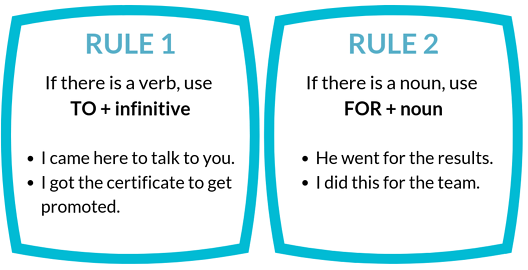
Rule 1: if there is a verb, use TO + infinitive

  • I came here to talk to you.
  • I study everyday to improve my English.

Rule 2: if there is a noun, use FOR

  • He came for the results.
  • I did this for the team.

That only gives us an idea of how to start, but there is much more.

I have researched and watched several videos to choose the least confusing approach. I think the following one is a smart approach. Ronnie puts it this way:

TO – TRANSFER / EXCHANGE

FOR – BENEFIT (GOOD)

“For you” or “To you”? People and pronouns

Should you say “I sent this letter to you” or “I sent this letter for you”? The answer is – both are possible, depending on what you mean. 

  • ‘I sent this letter to you’ means that, hopefully, you will receive my letter, because you are the recipient.
  • ‘I sent this letter for you’ means that I did you a favor and took the letter to the mailbox, but the recipient is a third person.

So remember these two rules:

If there is a transfer of something to someone → TO

  • Can you give this to her?
  • I wrote the letter to her. (I wrote the letter and she will receive it soon)

If the person will benefit from a service or a favor → FOR

  • This present is for him.
  • I wrote the letter for her. (She wasn’t able to write it and I did it for her as a favor)

Now we are going to work on another video. I would like you to start with the “5 levels” lesson below. The lesson has five parts. Each section will give you a challenge. Each section is designed to be more difficult than the previous ones.

If you find a section easy move on to the following one, but if you find it difficult, stop it and start working on the second video. Watch it carefully and take notes. Then read the rest of this lesson and then finish the “5 levels” lesson.

Read the full script, take notes and take the quiz on this lesson here.

So let’s look at some key points:

To Indicate the Destination

  • Our CEO is going to Rome tomorrow.
  • We’ll head to the headquarters in a second.
  • I am traveling to our branch in Bristol next month.

We use to when we indicate the destination, and usually there is movement involved. We often use verbs such as: go to, travel to, come to, head to, mail to, send to.

But there’s one common exception: you say go home, without to.
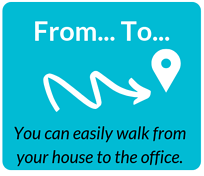
In the construction “from … to …”

  • It’s about 5km from my house to the university.
  • I work from 5 to 9.

To tell the time

In the USA, it is quite common to tell the time by saying the hour + the minutes.

Examples:

  • 5:30 – It’s five thirty.
  • 8:50 – It’s eight fifty.

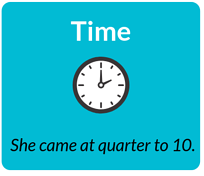
However, especially in the UK, it is very common to express how many minutes there are left until you reach the next hour, once it is 30 minutes after o’clock.

Examples:

  • 5:40 – it’s twenty to six.
  • 8:50 – it’s ten to nine.

With the verb “to give”

We also use to with the verbs of giving, such as givelendpaydeliver. However, with these verbs, it’s common to use a structure without to. For example, with give, you can give someone something, or give something to someone. Both structures are possible, but the first is more common.

  • So, you can say: Give the bottle to me.
  • Or: Give me the bottle.

Both are possible, but the second is more common.
Giving a reason

Reason tells you why someone does something. Here, you can use to plus an infinitive or for plus a noun. Don’t use for plus an -ing verb.

Examples:

  • We need to go to the shop to buy some batteries.
  • We need to go to the shop for some batteries.

Again, you’re talking about why you’re going to the shop.

Function

Function tells you what something is used for, for example a tool. Here, you can use three structures: to plus infinitive verb, for plus -ing or for plus noun.

Examples:

  • She developed a tool to analyse data collected at different times and places.

  • She developed a tool for analysing data collected at different times and places.

Expressing the benefits of something

  • Getting this certificate will be good for your career.
  • Fruits and vegetables are good for your health.
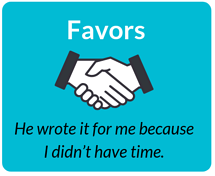
Doing a favor

  • He picked up the mail for me.
  • I didn’t know how to write the letter and she did it for me.
Scheduling something for the future

  • I set up our interview for May 4.
  • I will schedule our next session for next Tuesday.

A Simple, Powerful Prayer in Challenging Times

In this beautiful video, Moojibaba addresses the concerns and fears that many are facing during the current global crisis. Mooji shows us a powerful exercise and prayer which is tremendous support during such trying times — a ‘thank you’ prayer. “I’m going to show you right now a very simple practice to help you to feel calm and integrated again. Of all the mantras, of all the wonderful things you can think about, or say, or feel, saying, Thank you is one of the most effective and great mantras or prayers you can make.”

There are many useful words in his talk, words that we frequently use in our conversations.

Listen carefully and try to write down what you hear. It’s a good listening exercise. He speaks very clearly. And you can always turn on subtitles if you need.

Many of the adjectives he uses (calm, sad, angry, frustrated, lonely, depressed) we have learned already. Do you hear a different one? Which one?

What does he say that means the same as touched, moved?

And what about the nouns which name feelings, like peace, gratitude, depression? Make a list of them. Look them up in a dictionary.

“We hope you will join us in praying for the health and wellbeing of all who have been or will be affected by the virus, wherever they are in the world. May its growth and impact diminish quickly; may the sick recover to newfound strength; may we all use this challenging time to continue growing in ourselves, to discover the power and grace of the eternal light within us.”

~ Moojibaba

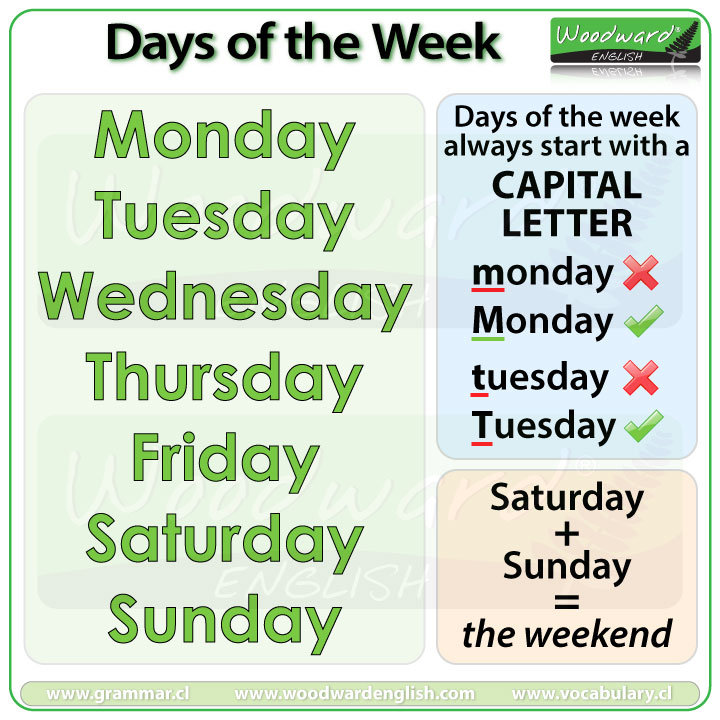
Days of the Week

Do you need to practice the days of the week? So listen and repeat. Notice that days, months, and holidays are always capitalized as these are proper nouns.

Now, have you ever wondered how the days of the week got their names?

Find below a video that explains their origins. You’ll learn how these names are related to ancient mythology and the planets.

‘Etymology’ is the study of the origin of words. Some of the days of the week have a simple etymology, like ‘Sunday’ — the day of the Sun, but many of the others aren’t as easy! This is a very interesting way to learn about the English language and the cultures that have influenced modern English. Gill will also explain how these names relate to the French and German languages. Join her as you will travel back in history, and out into the solar system.

Did you enjoy the journey? Now take the quiz to test yourself.

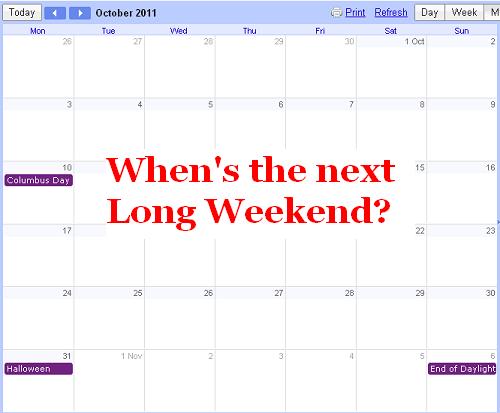
Easter! A long weekend?

Este está sendo um feriadão, ou um feriado prolongado para você?

A palavra mais comum para dizermos feriado em inglês é holiday. Existe a expressão day off, cujo significado é dia de folga, mas, dependendo do contexto (sempre ele!), pode também ser usada com o sentido de feriado.

Se quiser falar fim de semana prolongado ou feriadão, você pode usar as expressões long weekendthree-day weekend quando o feriado cai na sexta ou na segunda, e four-day-weekend quando o feriado cai na quinta, com recesso na sexta, ou na terça, com recesso na segunda. O termo bank holiday weekend é usado no inglês britânico.

E as perguntas mais comuns antes e depois de um feriado prolongado são a respeito de seus planos para ele: 

  • What are you going to do this long weekend? or What did you do this long weekend?
  • How is your long weekend going to be? or How was your long weekend?
  • How are you going to spend your three-day weekend? or How did you spend your three-day weekend?
  • Where are you going to spend your long weekend? or Where did you spend your long weekend?

Agora pratique, completando as frases com as palavras ou expressões que faltam:

1- Friday was a _____________________.

(Sexta-feira foi feriado.)

2- It was ____________________________________.

(Foi um feriado de três dias.)

3- There are many ____________________in Brazil.

(Há muitos feriados cristãos no Brasil.)

4- Next long weekend, Corpus Christi________________ a Thursday this year.

(O próximo feriado prolongado, Corpus Christi, cai em uma quinta-feira este ano.)

5- Last Thursday I was _____________________________. (four words)

(Quinta-feira passada, eu estava em clima de feriado.)

6- I _______________ the holiday at home.

(Passei o feriado em casa.)

Agora confira suas respostas:

1 – holiday; 2 – a three-day weekend; 3 – Christian holidays; 4 – falls on; 5 – in a holiday mood; 6 – spent .

Use essas expressões e saiba mais sobre feriado e feriado prolongado.

Jesus Christ has risen! Hallelujah!

Kelley Mooney sings her version of this classic song. Listen to it, look at the lyrics below, look up the words you don’t know and appreciate (realize, be conscious) what was done for us.

A crown of thorns placed on His head

He knew that He would soon be dead

He said, “Did you forget me, Father did you?”

They nailed Him to a wooden cross

Soon all the world would feel the loss

Of Christ the King before His Hallelujah

Hallelujah, Hallelujah

Hallelujah, Hallelujah

He hung His head and prepared to die

Then lifted His face up to the sky

Said, “I am coming home now Father, to you”

A reed which held His final sip

Was gently lifted to his lips

He drank His last and gave His soul to glory

Hallelujah, Hallelujah

Hallelujah, Hallelujah

The soldier who had used his sword

To pierce the body of our Lord Said, “Truly, this was Jesus Christ our Savior”

He looked with fear upon his sword

Then turned to face his Christ and Lord

Fell to his knees crying Hallelujah

Hallelujah, Hallelujah

Hallelujah, Hallelujah

Took from his head the thorny crown

And wrapped him in a linen gown

Then laid him down to rest inside the tomb

The holes in his hands, his feet and side

Now in our hearts we know he died

To save us from ourselves, oh Hallelujah

Hallelujah, Hallelujah

Hallelujah, Hallelujah

Three days went by, again they came

To move the stone, to bless the slain

With oil and spice anointing

Hallelujah

But as they went to move the stone

They saw that they were not alone

For Jesus Christ has risen, Hallelujah

Hallelujah, Hallelujah

Hallelujah, Hallelujah

Hallelujah, Hallelujah

Hallelujah, Hallelujah