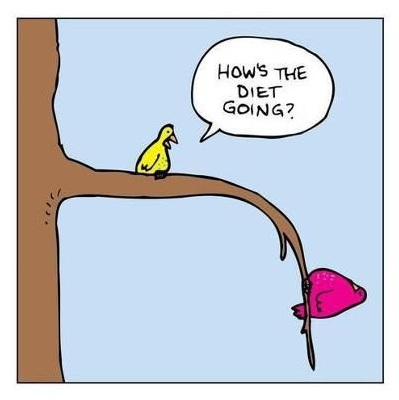
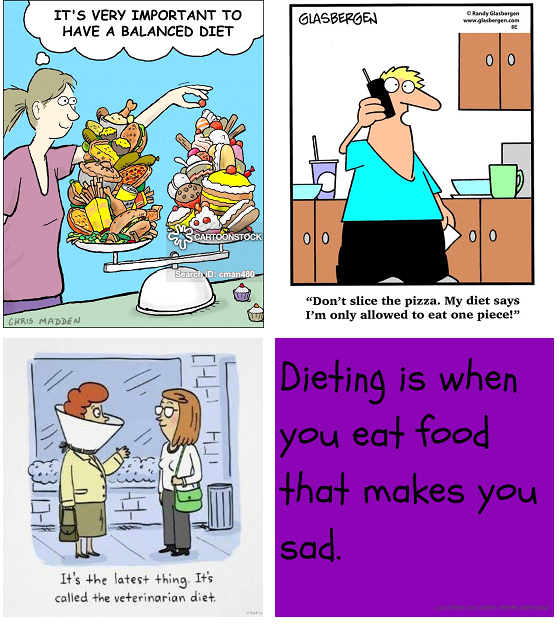
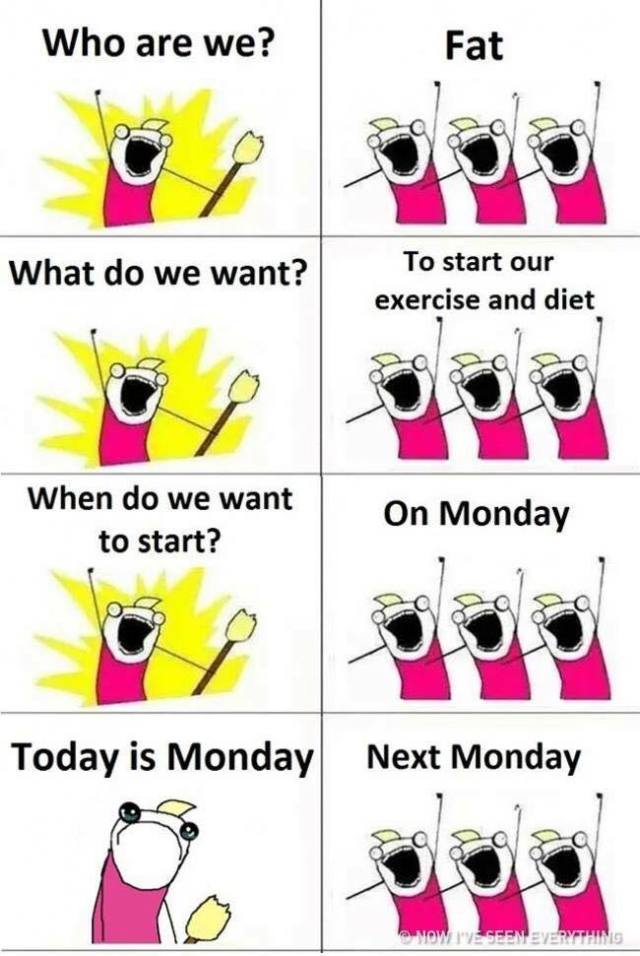
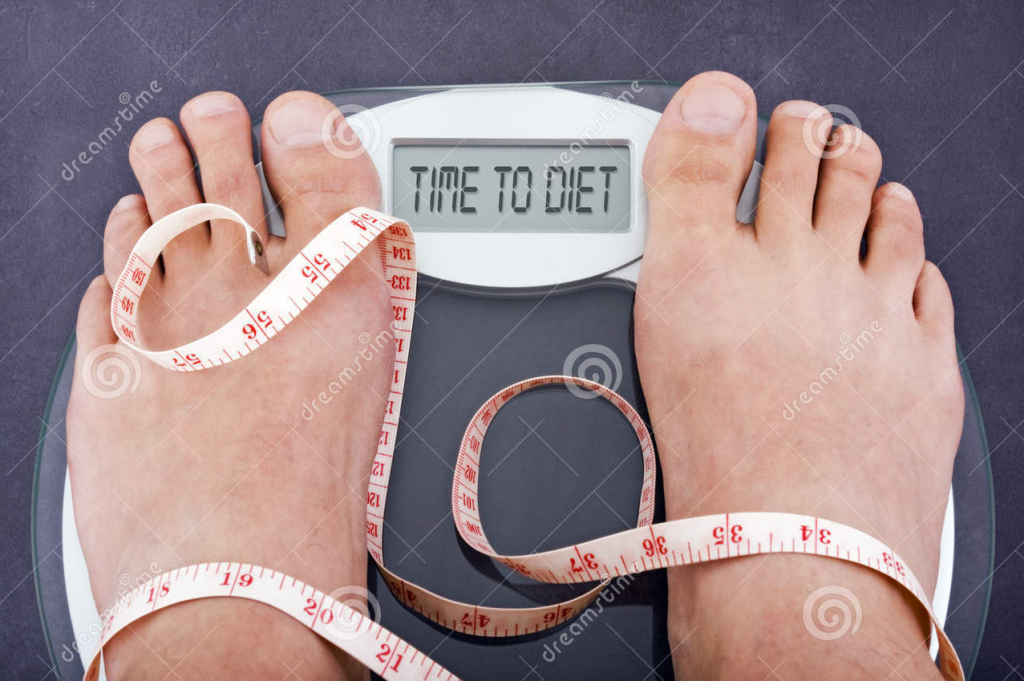
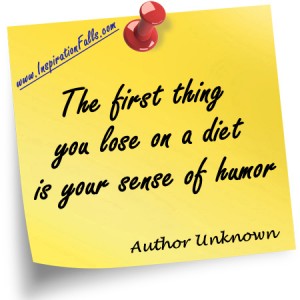
I have been talking about diet this week. Then a student sent me few jokes. Or would that be a few jokes?
There is a difference between few and a few.
Without a, few usually have rather negative meaning. It may ‘suggest not as manyas one would like’, ‘not as many as expected’, and similar ideas.
Few people can speak a foreign language perfectly.
A few is more positive: its meaning is generally closer to some. It may suggest ideas like ‘better than nothing’ or ‘more than expected’.
You don’t need to go shopping. We’ve got a few potatoes and some steak.
Compare:
His ideas are difficult, and few people understand them.
His ideas are difficult, but a few people understand them.
So, going back to the question put at the beginning of this post, what my diligent student did was: he’s sent me a few jokes about diet! 😉 Thanks Afonso!
We have already learned how to use: being on a diet, going on a diet, starting a diet and dietinghere.
And we go on a diet because we are, or we believe we are fat. Hehe… Asking about someone’s weight, is a kinda serious and private question, but in case we still feel comfortable to do so, that’s how we can ask:
Após um fim de semana de delícias e excessos, a idéia de muitos é: “Segunda-feira vou começar uma dieta, um regime!”
A forma mais comum de dizermos isso é:
I’m going on a dieton Monday!
What’s your decision? To go on a diet or to completely change your lifestyle?Qual é a sua decisão? Fazer uma dieta ou mudar completamente seu estilo de vida?
If I decide to go on a diet, my husband will go on a diet too.Se eu decidir fazer regime, meu marido vai fazer dieta também.
To start a diet, também é uma combinação possível para falarmos que vamos “começar um regime” ou “começar uma dieta”.
I’ve decided to start a diet… on Monday.Eu decidi começar uma dieta… na segunda.
We’re usually optimistic when we start a diet.Nós geralmente estamos otimistas quando começamos um regime.
Mas se queremos dizer “estar de regime” ou “estar de dieta”, a expressão é to be on a diet.
Life’s too short to be on a diet.A vida é curta demais para estar de regime.
Being on a diet is not as hard as most people think. Fazer regime não é tão ruim quanto a maioria das pessoas pensa.
You may be on a diet but you need to exercise as well. Você pode estar de dieta, mas você precisa se exercitar também.
Também existe a possibilidade de utilizarmos somente o verbo to diet(I need to diet – “Eu preciso fazer uma dieta”, “Eu preciso fazer um regime”), mas as opções anteriores são mais comuns.
O ambiente da Oktoberfest é ideal para que o Neil e a Grazi tragam para você expressões usadas quando o assunto é bebida alcoólica. Saiba como as expressões ‘cheers!’, ‘one for the road’, ‘teetotaller’ e ‘drink responsibly’ são usadas.
Transcrição
Neil Hello. I’m Neil, here to help you improve your English.
Grazi E eu sou Grazi. Hoje trazemos algumas expressões úteis para quando você for tomar umas e outras com os amigos.
Neil I’ll drink to that! Cheers!
Grazi Cheers! A palavra ‘cheer’ tem a ver com animação, bom humor. Isso é o que se diz tradicionalmente quando se faz um brinde. Saúde!
Neil Yes, you make a toast. Saúde! Cheers! Well, we’ve drunk enough for today, Grazi. Let’s have just one more and go. Let’s have one for the road!
Grazi ‘One for the road’, tradução literal, ‘um para a rua’. É o que a gente chama de ‘saideira’, o último copo de vinho, cerveja, o que você estiver bebendo antes de ir embora.
Neil Let’s hear some examples of how these expressions are used.
Examples A: Shall I order another round for us? B: OK. Just one for the road and I’m off. My mother will be angry if I’m late for dinner.
A: You got a place at university? This deserves a toast: Cheers! B: Cheers!
Grazi Mas nesta lição, a gente não pode excluir quem não consome bebida alcoólica. E como se diz abstêmio em inglês, Neil?
Neil If you don’t drink alcohol, you are a teetotaller. My cousin is a teetotaller.
Grazi E se você gosta de beber vinho, uma cervejinha, uísque, caipirinha…
Neil Ah, caipirinha! I love caipirinha!
Grazi I know you do. Mas tenha bom senso e beba com moderação.
Neil Yes, drink responsibly. Não saia bêbado por aí. Don’t get drunk!