Daily Routine II

In the following two videos, you will learn how to talk about your daily routine by observing Bob’s routine.

Bob will take you along with him for part of his day and explain everything he does using clear and easy-to-understand English. As you watch, you will be exposed to natural vocabulary, useful expressions, and common sentence patterns that native speakers use when talking about their everyday activities.

Build a Vocabulary Log

Build a vocabulary log as you watch the videos. Write down new words, phrases, phrasal verbs, collocations, and useful expressions.

Before You Watch

Think about your own daily routine and answer these questions:

  1. What time do you usually wake up?
  2. What is the first thing you do in the morning?
  3. Do you work, study, or both?
  4. What do you usually do in the evening?
  5. What time do you normally go to bed?

Video 1

Comprehension Questions

  1. What time does Bob start his day?
  2. What is the first thing he does?
  3. What activities does he do before work?
  4. What does he do during the day?
  5. What new words or expressions did you learn?

Video 2

While Watching

Continue taking notes and observe:

  • Additional daily activities
  • Useful expressions
  • Repeated vocabulary
  • Differences between your routine and Bob’s routine

Comprehension Questions

  1. What activities does Bob mention in this video?
  2. Which activities are similar to your routine?
  3. Which activities are different from your routine?
  4. Which phrasal verbs did you hear?
  5. Which collocations did you hear?

Speaking Practice

Answer the questions in complete sentences.

  1. What time do you usually get up?
  2. What do you do after you wake up?
  3. What do you usually have for breakfast?
  4. What do you do during the day?
  5. What do you do after work or school?
  6. What do you usually do in the evening?
  7. What time do you go to bed?

Writing Practice

Write a paragraph (80–120 words) describing your daily routine.

Use:

  • Present Simple
  • Time expressions (first, then, after that, later, finally)
  • At least 3 phrasal verbs
  • At least 3 collocations

Example starters:

  • I usually wake up at…
  • After that, I…
  • Then I…
  • In the evening, I…
  • Before I go to bed, I…

Challenge Activity

Watch both videos again.

Create a table comparing your routine with Bob’s.
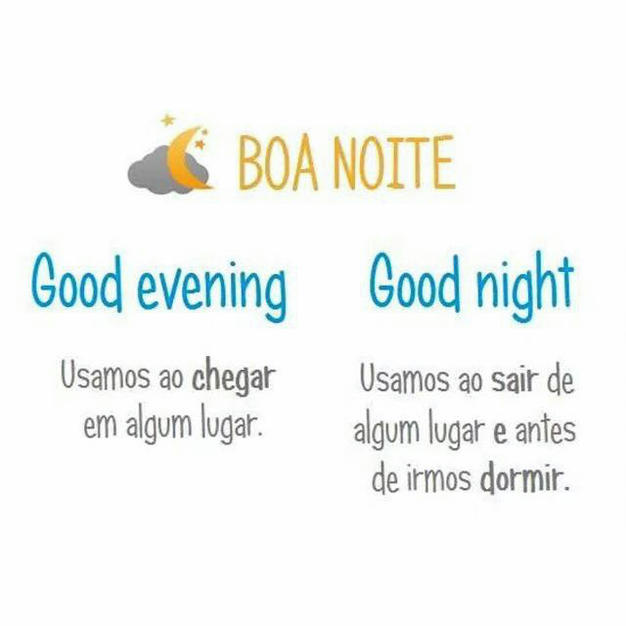
Good Evening × Good Night

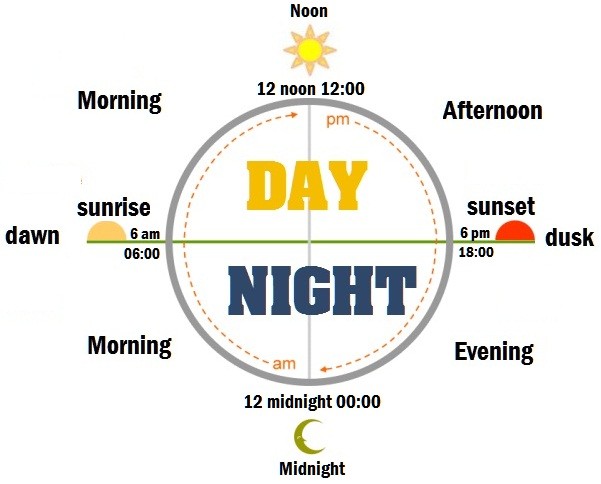
Day night

Parts of the Day

Evening

Evening is the period when the sky starts getting dark, usually between 6:00 PM and 8:00 PM.

People are generally still awake, working, studying, eating dinner, or socializing during the evening.

Night

Night is the period when it is dark and people are generally relaxing or sleeping.

Night usually begins later in the evening and continues until the early morning hours.


Good Evening

Use “Good evening” to say hello after approximately 6:00 PM.

It is commonly used:

  • at restaurants;
  • in professional situations;
  • in formal conversations;
  • in speeches and presentations.

Examples

  • “Good evening, do you have a reservation?” (at a restaurant)
  • “Good evening, Tom. How are you?” (to a colleague)
  • “Good evening, ladies and gentlemen…” (in a speech)

Important

In general, “good evening” sounds a little more formal.

Friends do not usually say “good evening” to each other. They are more likely to say:

  • “Hi”
  • “Hello”
  • “What’s up?”
  • “Hey”

Good Night

Use “Good night” to say goodbye, especially:

  • when leaving to go home;
  • when ending a conversation late at night;
  • before going to bed.

Family members commonly say “good night” before sleeping.

Examples

  • “Good night, Janet. See you tomorrow.”
  • “Good night, mom. I’m going to bed.”

Important Difference

ExpressionFunctionMeaning
Good eveningGreeting“Olá / Boa noite”
Good nightFarewell“Tchau / Boa noite”

Simple Rule:

  • Good evening = hello
  • Good night = goodbye

Authentic Examples

Opening of a Television Program (Greeting)

Hello, good evening and welcome: The David Frost story. Sir David Frost is famous the world over for his interviews with presidents and prime ministers, but his journalistic side is just one part of his repertoire.” (BBC)

Translation:

“Olá, boa noite e sejam bem-vindos: A história de David Frost. Sir David Frost é internacionalmente conhecido por suas entrevistas com presidentes e primeiros-ministros, mas o jornalismo é apenas uma de suas várias facetas.”

In this example, good evening is used to welcome the audience at the beginning of the program.


End of a Television Program (Farewell)

“Thank you so much to all of our guests, to you at home for being with us. We’ll see you tomorrow night, 8:00 sharp Eastern. Good night, everybody.(CNN)

Translation:

“Agradeço aos convidados pela presença e a vocês em casa pela audiência. Até amanhã às 20h em ponto (no horário da costa leste). Boa noite a todos.”

In this example, good night is used to say goodbye at the end of the program.


Practice

Complete with “good evening” or “good night”

  1. ____________, ladies and gentlemen. Welcome to our event.
  2. I’m going to bed now. ____________!
  3. ____________, sir. Do you have a reservation?
  4. See you tomorrow. ____________!
  5. ____________, everyone, and welcome to the show.

Extra Tip

Many Brazilian students translate both expressions simply as “boa noite”, but in English the situation is important:

  • If you are arrivingGood evening
  • If you are leaving or going to sleepGood night
good-evening-ou-good-night