Which future? Will, going to or present progressive?

There are some differences between these three ways of talking about the future. The differences are not always important; often we can use two or three different forms to talk about the same thing.

PREDICTIONS

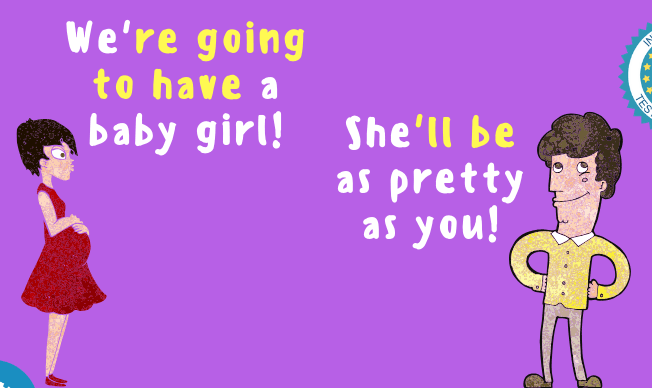
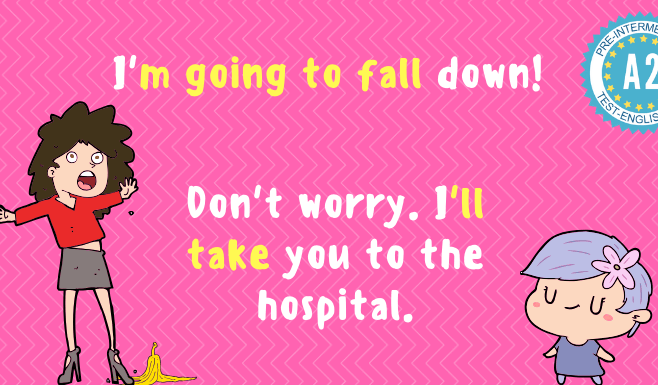
Going to: we can see the future in the present; we see things coming or starting:

Look out! You’re going to break that glass! (I can see it now.)

Will: we think or believe things about the future:

Don’t give him a watch – he‘ll break it. (I think so, because I know him.)

Practice I: What’s the best form?

  1. Perhaps we are going to / will meet again one day.
  2. Look! Andy is going to / will fall off his bike!
  3. I think you are going to / will love Paris.
  4. Look at those clouds: it‘s going to / will rain.

DECISIONS

Will: we are making decisions; spontaneous decisions made at the time of speaking:

‘We’ve got a letter from Jan.’ ‘Ok, I‘ll answer it.

Going to: decisions are already made; decision made before the time of speaking:

‘There are a lot of letters to answer.’ ‘I know. ‘I‘m going to do them all on Tuesday.’

Practice II: Which one: I’ll or I’m going to?

  1. I’ve decided (that) ……………… stop smoking.
  2. ‘I don’t want to cook tonight.’ ‘All right, then. ……..cook.’
  3. ‘I haven’t got any money.’ ‘No? OK. ………….. pay.’
  4. ‘Do you want to go out tonight?’ ‘No, ………….. study English.’
  5. ‘These pants are dirty.’ ‘Really? Oh, yes, they are. …………. wash them.’
  6. ‘Is Ann eating with us?’ ‘Wait a minute. ………….. ask her.’

PLANS AND ARRANGEMENTS

Going to and the present progressive are often both possible when we talk about plans.

We use the present progressive mostly for fixed plans with a definite time and/or place:

I‘m going to see Ann sometime soon.

I‘m meeting Ann at the theater at 8 pm.

Sarah‘s starting university on September 17.

Practice III: In three of these sentences, the present progressive is possible. Which three?

  1. Jack is going to arrive at 4 pm.
  2. I’m going to learn French one of these days.
  3. I’m going to fly to Paris next year.
  4. Mom’s going to tell me about her problems.
  5. We’re all going to spend this month in Brazil.
  6. Are you going to answer all those emails?

ANSWERS:

PRACTICE I: 1. will; 2. is going to; 3. will; 4. is going to

PRACTICE II: 1. I’m going to; 2. I’ll; 3. I’ll; 4. I’m going to; 5. I’ll; 6. I’ll

PRACTICE III: 1. Jack is arriving at 4.00.; 3. I’m flying to Paris next year.; 5. We’re all spending this month in Brazil.

Here is a clear, simple, focused, and entertaining video that supports what we’ve learned.

Now practice will and going to a little more. In which sentences the present progressive is possible?

Lesson from The Good Grammar Book, Michael Swan and video transcript.

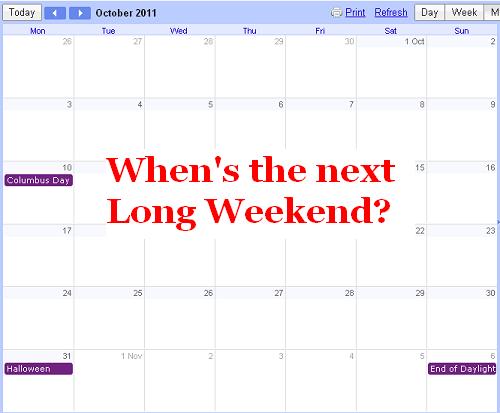
Corpus Christi: the Body of Christ we receive and are called to become. Is it a long weekend for you?

Carefully listen to the beautiful message below. Take notes of the new words or the entire sentences, and notice pronunciation.

Então, Corpus Christi será um feriadão, um feriado prolongado para você? Sabe como dizer isso em inglês?

Quando um feriado cai próximo ao final de semana, e empresas ou escolas fazem um recesso na quinta e sexta, ou segunda e terça, chamamos em inglês de long weekend.

Você pode dizer também, three-day weekend, quando o feriado é na sexta ou na segunda, ou four-day weekend, se é na quinta, com recesso na sexta. 

E as perguntas mais comuns antes de um feriado prolongado são: 

Como será seu feriadão? Como/Onde você passará o feriadão? O que você fará neste feriado prolongado? Você tem planos para o feriado?

  • How is your long weekend going to be?
  • How/Where are you going to spend your three-day weekend?
  • What are you going to do this long weekend?
  • Do you have any plans for the holiday?

Agora que tal usar estas perguntas juntamente com o vocabulário para este feriado de Corpus Christi?

Então complete as frases com as palavras ou expressões que faltam:

1- Thursday is a__________________.  It’s _____________________. (Quinta-feira é feriado. É…).

2- It’s _________________________ for me.  (É/não é um feriadão/feriado de quatro dias para mim.)

3- There are many_______________________in Brazil.  (Há muitos feriados cristãos no Brasil.)

4- Corpus Christi always __________________ a Thursday.  (Corpus Christi sempre cai em uma   quinta-feira.)

5- I’m in a__________________.  (Estou em clima de feriado.)

6- We’re ____________________ Corpus Christi at/in _____________________.  (Passaremos Corpus Christi……)

Confira suas respostas: 1 – holiday/Corpus Christi; 2 – long weekend/a four-day weekend; 3 – Christian holidays; 4- falls on; 5 – holiday mood; 6 – spend.

Então:

  • Enjoy your holiday! Aproveite/curta seu feriado!
  • Have a great holiday! Tenha um ótimo feriado!

Quer mais? Clique aqui.

I’m kinda sad!

Kinda sorta

Hi everyone! The other day I used kinda in a post, which was really appropriate. I think it’s about time for me to tell you what it means. Listen carefully to the following video.

Então, existem duas maneiras diferentes de usar estas palavras em inglês. A primeira é usar kindsort e type quando você está falando sobre diferentes categorias ou grupos de coisas. E a segunda maneira de usar kind e sort (mas não type) é ao expressar incerteza sobre algo.

1. KIND OF, SORT OF, TYPE OF: CATEGORIAS OU GRUPOS

Essas palavras sempre vêm acompanhadas da preposição “of”: kind of, sort of, e type of . Exemplos:

1. What type of music do you like? (Que tipo de música você gosta?)

2. What are the different kinds of spices in this cake? (Quais são os diferentes tipos de condimentos desse bolo?)

3. That magazine prints fake news and all sorts of other rubbish. (Aquela revista publica notícias falsas e todo tipo de besteira.)

2. KINDA, SORTA: ESTABELECER INCERTEZA

Kind + of = kinda e sort + of = sorta. Essas palavras são usadas no geral para expressar a ideia de “um pouco” ou “meio”. Podemos também usá-las para estabelecer incerteza ou quando achamos que a nossa opinião poderá ofender alguém.

1. Mm, I’m kinda cold, could you please close the window? (Estou com um pouquinho de frio, você poderia fechar a janela?)

2. Do you like tomatoes? Mm, sorta. (Você gosta de tomates? Mais ou menos.)

3. “KINDA-SORTA”: MARCA DE UMA GERAÇÃO MAIS JOVEM

Essa expressão às vezes significa um pouco (1) e outras vezes muito (2). Também, pode mostrar indecisão (3) ou ser usada quando você está com preguiça (4). Independente da forma como é usada, essa expressão é muito popular hoje em dia, então é importante conhecê-la. Essa expressão é usada de diversas maneiras:

1. Who is that actor? / Oh, he used to be kinda-sorta famous back in the 90s. (Quem é aquele ator? / Ah, ele costumava ser um pouco famoso nos anos 90.)

2. How’s my writing paper? / Um, it still kinda-sorta needs some work. (Como está minha redação? / Hum, ainda precisa de muitas melhoras.)

3. So, are you guys, like, together? / Well, we’re kinda-sorta boyfriend/girlfriend. (Então, vocês dois estão, tipo, juntos? / Bem, nós somos meio que namorados.)

4. Do you wanna go out tonight? / Mm…kinda-sorta, not really, maybe, but yeah, okay. (Você quer sair hoje à noite? / Humm, mais ou menos, não muito, talvez, mas tá, ok.)

That’s it! Em que situações você usa kind, sort ou type na sua vida? Please, share it with me!
Prepositions of time: AT, ON and IN

Prepositions are words that show things like:

TIME = at 2:00 o’clock

PLACE = in Moscow

DIRECTION = near the airport

First, we learned a few basic prepositions of place. Next, we will look at IN, ON,and AT used to describe WHEN something happens, happened, and will happen.

AT

We use AT with specific times (hour / minutes):

  • I get up at 7 o’clock.
  • My English class starts at 10am.
  • She finishes work at 6.15.
  • I left the party at midnight.

Midnight (and midday) is a specific hour which is why we use AT.

12am = midnight
12pm = midday / noon

We use AT for a holiday period of two or more days:

  • Do you normally get together with your relatives at Christmas?
  • Did you eat a lot of chocolate at Easter?

ON

We use ON for specific days and dates:

  • I will return it to you on Wednesday.
  • They got married on Friday the 13th.
  • We get paid on the 20th of every month.
  • I drank too much milk on New Year’s eve.

Remember that for dates, we use ordinal numbers.

E.g. the First of September (not the one of September)

IN

We use IN for specific months, years, seasons, decades, centuries and lengths of time.

  • My birthday is in January. (I don’t mention the date, just the month)
  • My grandmother was born in 1927.
  • The river near my house is dry in summer.
  • Life was difficult in the 1940s.
  • The music was great in the eighties.
  • The company was founded in the 19th century.
  • We need to have this report ready in 15 minutes.

Compare:

The New Zealand National day is in February.
(I don’t mention the day – only the month)

The New Zealand National day is on February 6th.
(I mention the day – the order is not important)

AT ON IN - Prepositions of Time in English

The Weekend

Sometimes you will hear AT the weekend and sometimes ON the weekend.

They are both correct. ON the weekend is used in United States.

  • Where did you go on the weekend? (American English)
  • Where did you go at the weekend? (British English)
The prepositions AT, ON, IN with parts of the day - English grammar rules

At the moment

I don’t want to talk about it at the moment.

We don’t use Prepositions

We do not use AT, ON, IN, or THE before these words:

  • LAST, NEXT, THIS and EVERY
  • TODAY, TOMORROW, YESTERDAY, TONIGHT

The party is next Friday.

They went to the mountains last month.

Choose the correct alternative to complete the sentence.

“Between you and ___: I or me?”

Complete the following sentences:

Would you like to come to lunch with Noah and ___?

Just between you and ___ …

When the word in question is the object of a preposition and not the subject of a sentence or phrase, we should use the object pronoun.

A subject pronoun is the performer of the action in a sentence.

The object pronoun is the receiver of the action in a sentence.

So the correct answers are:

Would you like to come to lunch with Noah and me?

Just between you and me

I is a subject pronoun and me is an object pronoun

I like chocolate. / The call is for me.

So a good way to check yourself is to remove the other person.

And just one more important thing:

It is considered polite to mention oneself last in double subjects or objects.

Why don’t you and I go away for the weekend?

The invitation was for Tracy and me.