Depois, com a saída do Reino Unido da União Europeia, o termo brexit, uma fusão de duas palavras inglesas, apareceu repetidamente inserido em todos os veículos de comunicação em língua portuguesa.
Agora, mais um aparece repetidamente mesclado a textos em português: choker!
Look up the word choke in a dictionary to see what it means!
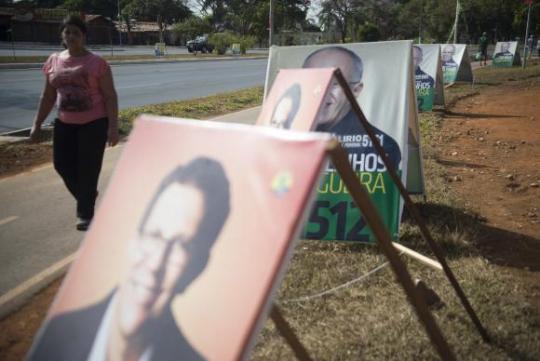
Women form the majority of the Brazilian voters, more than 53% of all voters. But at this elections in October 2, only 31.39% of the candidates for mayor, vice-mayor, and councilors are women.
According to the Electoral Court, in total, 475,363 candidates are licensed to receive votes in this year’s municipal elections, 326,149 (68.61%) are men and 149,214 (31.39%) are women.
In general, despite the difference, parties and coalitions managed to observe the Election Law that established a minimum of 30% and a maximum 70% for candidates of each gender.
The requirement was imposed after the so-called minor election reform was approved in 2009, and changed a part of the legislation that expressed “should reserve” for “must reserve” a minimum. Thus, as the number of licenses granted for women’s candidates has not reached the minimum of 30%, the Superior Electoral Court (TSE) has demanded parties or coalitions to reduce the number of men’s candidates to reach the gender quota.
Age group
According to the TSE, most candidates are aged between 45 and 49 years old (74,353), followed by candidates between 40 and 44 years old (73.802), 50 to 54 years old (67 514) and 35 to 39 years old (67,140), respectively 15.64%, 15.53%, 14.20% and 14.12%.
Candidates aged between 18 and 19 years old reach 0.45% (2,119) of those able to run the elections, while 3.11% (14 780) of candidates are aged between 20 and 24, and 6.08% (28 913), between 25 and 29.
Girls! Thanks for thinking of me! My day was made brighter by your act of kindness! I feel like you are the flowers in my garden, that are little by little, developing well and being more and more successful, not only with English, but in everything you do.