The English interdental sounds /θ/ and /ð/ — the famous “th” — have no direct equivalent in Portuguese. That’s why they are often tricky for learners.
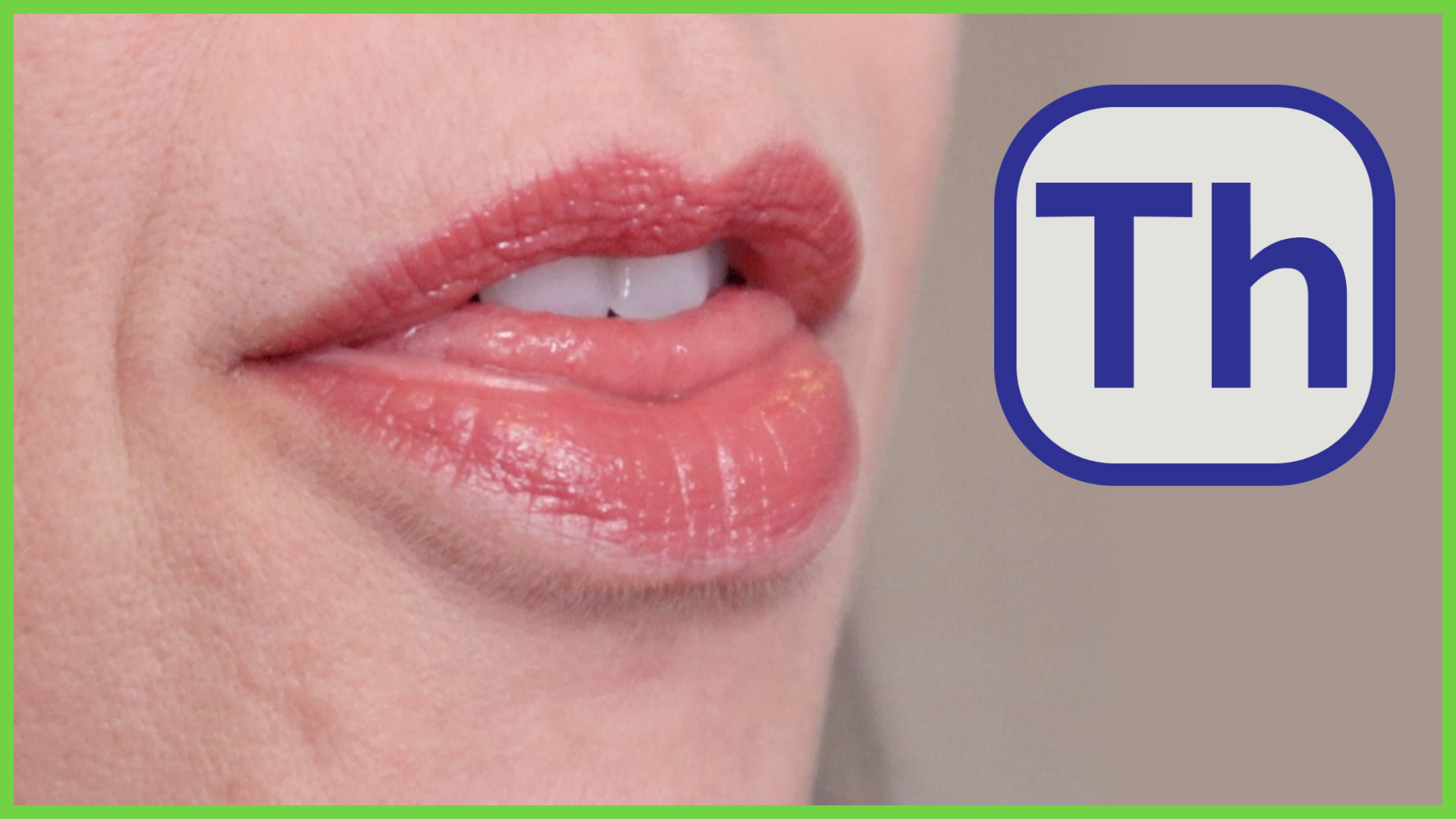
👅 Correct tongue position:
Your tongue goes between your upper and lower teeth — just enough so you can gently blow air (for /θ/) or use your voice (for /ð/).
⚠️ Common Substitutions (and Why They’re a Problem)
Many learners mistakenly replace:
/θ/ with /ts/
/ð/ with /dz/
Others go further and substitute:
/θ/ with /s
/ð/ with /z
These substitutions are not acceptable in clear English pronunciation, because they can change the meaning of words — a process called neutralization of contrast.
🔄 See the difference for yourself:
Correct Word
Learner’s Substitution
Meaning Changes?
math /mæθ/
mats /mæts/
Yes – completely different word!
breathe /brið/
breeds /bridz/
Yes – noun vs. verb confusion
thin /θɪn/
sin /sɪn/
Yes – totally different word!
thick /θɪk/
sick /sɪk/
Yes – again, very different
breathe /brið/
breeze /briːz/
Yes – verb vs. noun, different root
🎧 Now it’s your turn!
Take the time to watch and repeat with these two helpful videos that show you exactly how to pronounce the “TH” sounds:
🎯Mini Quiz: Can You Hear the Difference?
👉 Say these word pairs out loud. Can you feel the difference between /θ/ (voiceless) and /ð/ (voiced)?
think / sink
thick / sick
breath / breathe
then / den
they / day
✔ Tip: /θ/ feels like a whisper. /ð/ has voice.
✨ Poetic Practice Sentences
Practice these rhythmic and literary phrases to develop fluency and sensitivity to the sounds:
“Think of things that thrill your thoughts.” (Notice all the soft /θ/ sounds.)
“This and that, these and those – the threads that tie our prose.” (/ð/ as in this, that, these, those – all voiced.)
“With every breath, I feel the breeze.” (contrast between breathe /ð/ and breeze /z/)
“Thin lines of thought thread through the thick of night.” (a mix of /θ/ and poetic rhythm)
📝 Writing Task
Write one sentence using at least two words with /θ/.
Write one sentence using at least two words with /ð/.
Absolutely “clear skies”! Have you ever heard that expression?
Let’s break it down. First, why do we sometimes use the plural “skies” if there’s only one sky over Earth? Should we say sky or skies?
☁️ Sky vs Skies – What’s the difference?
SKY (noun)
/ˈskaɪ/ (plural: skies) The sky is the space above the Earth — where we see clouds, the sun, the moon, and stars.
Most of the time, we use the sky in the singular:
The sky suddenly went dark, and it started to rain.
What’s that in thesky?
There was not a single cloud in thesky.
White clouds moved fast across the sky.
A crowd gathered under a cloudy sky.
Meteors falling from the sky.
A cloudless sky.
The night sky.
When an adjective is used with “sky,” we typically say a [adjective] sky: a blue sky, a grey sky, a cloudless sky.
SKIES – When and why do we use the plural?
We usually use skies when we’re:
Describing different types of sky, the different appearances or conditions of the sky, especially at different times:
A land of blue skies and warm sunshine.
The skies are overcast today — it’s chilly and damp.
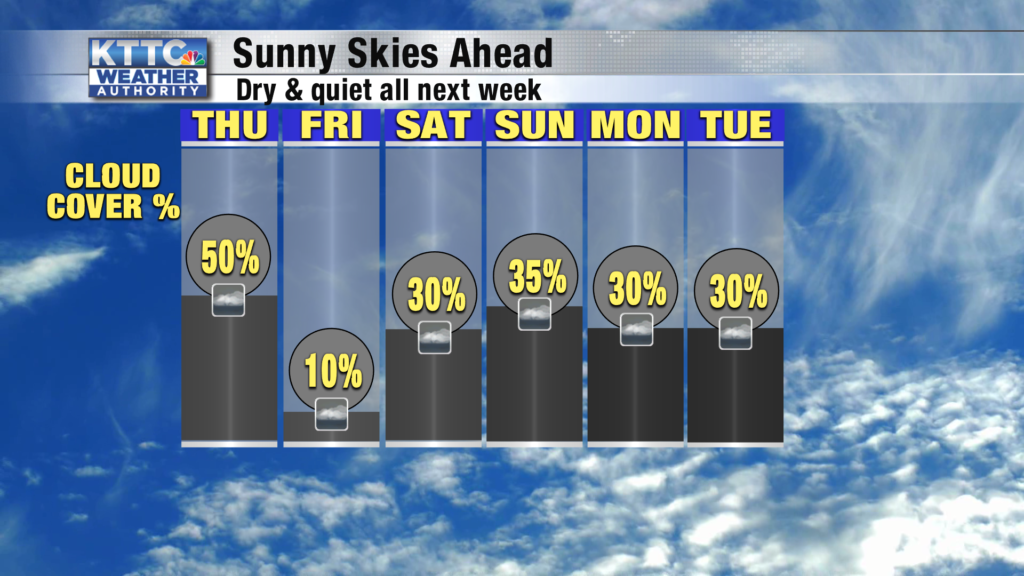
Clear skies could mean temperatures will drop tonight.
The tropical skies of the Caribbean are breathtaking.
We traveled across lands with blue, grey, and golden skies.
The forecast calls for clear skies with a chance of thunderstorms later.
Being poetic or expressive:
Reach for the skies! (freedom, ambition)
He dreamed of distant skies.
Skies of hope and wonder.
📝 So yes — we use the plural “skies” to emphasize variation or contrast, often poetically or descriptively. It’s not about having more than one actual sky but about the many faces it can show. It’s not always mandatory but adds richness and a sense of vastness or variety.
☀️ Now, about the collocation “clear skies”:
We say clear skies, not clean skies.
Clear means: cloudless, bright, and free of mist or haze.
✅ The skies were clear and blue.
✅ A clear June morning.
🧠 Note: In some contexts, clear skies can also be used metaphorically — for example, in economic forecasts or optimistic outlooks.
✅ To sum up:
Use sky when referring to the space above in a general or singular sense.
Use skies to be poetic, describe the different appearances or conditions of the sky, or emphasize vastness.
Always say clear skies, not clean skies.
📝 Exercises – Sky vs. Skies & Clear Skies
🔹 1. Complete as frases com sky ou skies.
a) There wasn’t a single cloud in the __________. b) They dreamed of freedom under foreign __________. c) We watched the sunset as it painted the __________ orange and pink. d) The pilot said we might have turbulence due to cloudy __________. e) The moon was high in the night __________.
🔹 2. Escolha a opção correta.
a) The weather forecast says we’ll have: 🔘 clean skies 🔘 clear skies
b) When describing one specific place, we usually use: 🔘 skies 🔘 sky
c) In poetic or literary expressions, it’s more natural to say: 🔘 reach for the sky 🔘 reach for the skies
d) We say: 🔘 a cloudless sky 🔘 a cloudless skies
e) Which is correct? 🔘 The skies was blue. 🔘 The sky was blue.
🔹 3. Escreva frases usando as palavras entre parênteses.
Use “sky” ou “skies” conforme o contexto.
a) (beautiful / today) → ________________________________________ b) (dark / at night) → ________________________________________ c) (reach / poetic) → ________________________________________ d) (forecast / tomorrow) → ________________________________________ e) (I love / clear) → ________________________________________
🔹 4. Corrija a frase, se necessário.
a) A clear sky are expected tomorrow. b) The clean skies made the morning even more special. c) What is that in the skies? d) A crowd gathered under a cloudy sky.
✅ Gabarito – Sky vs. Skies & Clear Skies
🔹 1. Complete as frases com sky ou skies.
a) There wasn’t a single cloud in the sky. b) They dreamed of freedom under foreign skies. c) We watched the sunset as it painted the sky orange and pink. d) The pilot said we might have turbulence due to cloudy skies. e) The moon was high in the night sky.
🔹 2. Escolha a opção correta.
a) ✅ clear skies b) ✅ sky c) ✅ reach for the skies d) ✅ a cloudless sky e) ✅ The sky was blue.
🔹 3. Escreva frases usando as palavras entre parênteses.
(Respostas variam; aqui estão sugestões corretas)
a) The sky is beautiful today. b) The sky gets very dark at night. c) She told him to reach for the skies. d) The forecast says clear skies tomorrow. e) I love clear skies in the morning.
🔹 4. Corrija a frase, se necessário.
a) ❌ A clear sky is expected tomorrow. b) ❌ The clear skies made the morning even more special. c) ❌ What is that in the sky? d) ✅ Correta!
What do you do every day? What’s a typical day like for you?
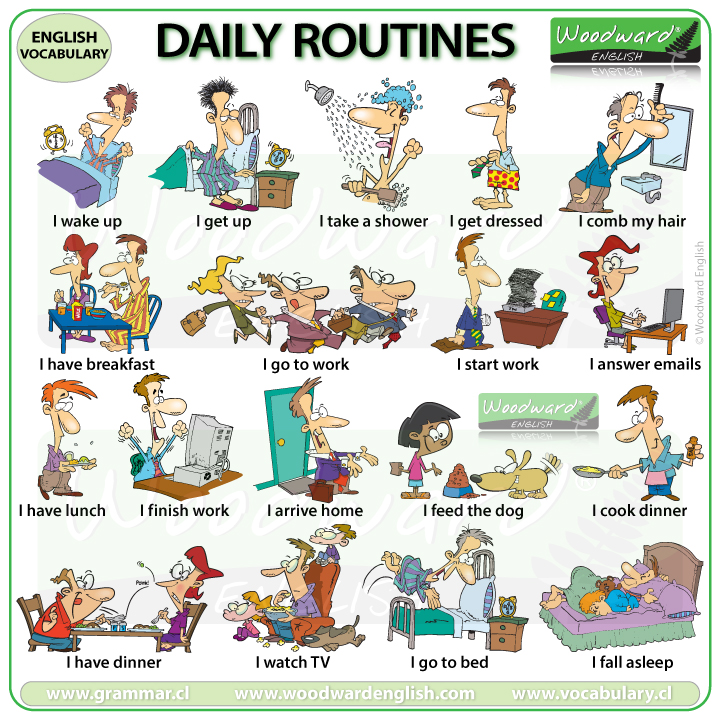
Learning how to talk about your daily routine is super important, and we’ve already learned lots of useful words and phrases with Daily routine 1 and Daily routine 2.
In this lesson, you’ll learn different ways to talk about: ✅ how you work ✅ your free time and hobbies ✅ meals and eating habits ✅ activities and sleep habits
Listen carefully to the pronunciation, and remember — you can slow down the playback speed by clicking the Settings icon if you need to.
Talking About Your Work Routine
🕒 Talking about your work schedule
✅ I start work at [time], and I finish at [time].
✅ I work from [time] to [time].
✅ I usually finish work by [time] at the latest.
✅ I finish at [time] at the earliest.
✅ I’m at the office from [time] till [time].
✅ I work different hours every day.(To freelancers)
🏃♂️ Talking about flexible schedules or set routines
✅ I like to get an early start.
✅ I take a long lunch break. .
✅ I take a short lunch break.
✅ I try to leave on time.
✅ I never stay late or do overtime.
⏰ Talking about working long hours or staying late
✅ I often have to stay late at work.
✅ Sometimes I stay late if there’s something I need to finish.
✅ I work long hours.
🚗 Talking about commuting
✅ My commute takes around [time].
✅ I don’t miss commuting every day.
✅ I have to leave the house at [time] at the latest.
🌟 Bonus expressions to help you sound more natural
✅ It suits me.
✅ It’s not all fun and games.
✅ It sucks!
📚 Vocabulary tip
at the earliest
at the latest
Talking About Free Time Habits
🛋️ If you prefer to relax at home
✅ I just crash on the sofa and watch TV.
✅ I don’t have the energy to do much after work.
✅ During the work week, there just isn’t the time to do much.
🏃♂️ If you’re more active and like to go out
✅ I like to get out of the house when I can.
✅ I try to arrange something most evenings.
✅ I prefer to stay busy.
🏀 Talking about specific activities
✅ I’ve started going to a boxing class twice a week. ✅ I play tennis on Wednesdays. ✅ I also play basketball every Thursday. ✅ I go out with friends for a coffee or a drink once or twice a week.
📌 Use on + day of the week: I play tennis on Wednesdays.
📌 Use once/twice a weekto expressfrequency: I go out with friends once a week.
🕰️ Adverbs of Frequency
✅ often ✅ generally ✅ sometimes ✅ occasionally
I generally go running around the park after I get home.
Talking About Eating Habits
🍽️ Useful expressions
✅ My meal habits are all over the place. Sometimes I eat dinner at 7:30, sometimes at 11!
✅ Sometimes I skip meals. If I’m busy, I might skip lunch.
✅ Me and my boyfriend take turns cooking.* We take turns cooking dinner during the week.
✅ I’ll cook a big batch of something, then freeze it. That way I have food ready for several days.
* NOTE:
The sentence “Me and my boyfriend take turns cooking” is commonly used in informal speech, but it’s not grammatically correct in standard English. The correct form would be:
“My boyfriend and I take turns cooking.”
In English, it’s considered more polite and grammatically correct to put yourself last when mentioning others (i.e., “I” after “my boyfriend”).
⏰ Meal times
✅ Do you eat at the same times every day?
✅ I have to eat at the same time every day. Because that’s the only time I have free.
✅ I might eat dinner at seven-thirty, or I might not eat until eleven.
🥗 Meal prep and lunchboxes
✅ If I’m organised, I’ll cook at the weekends so I can take food with me to work.
✅ Otherwise, I’ll buy a sandwich or something from the bakery.
🍕 Takeaway and delivery
✅ We generally get a takeaway on Friday evening.
✅ I try not to waste money on takeaways and eating out.
🌞🌙 Morning Person or Night Owl?
🌅 Morning Person
✅ I like to get some stuff finished early in the day.
✅ It helps me feel more productive.
✅ I try to go to bed by eleven.
🌙 Night Owl
✅ I’m a total night owl.
✅ I stay up late on weekends.
✅ I often go to bed quite late.
✅ I really struggle to get moving in the morning.
😴 Phrases about sleep and daily routines
✅ Sometimes I take a nap in the afternoon.
✅ If I don’t get seven or eight hours of sleep, I find it hard to focus at work.
✅ I don’t think I sleep that much.
QUIZ:
Test your understanding of the vocabulary and ideas you saw in this lesson by clicking here.