Talking About the Weather

🎯 Objectives

  • Learn common English adjectives to describe the weather.
  • Practice asking and answering: “What’s the weather like?”
  • Connect weather vocabulary to images, sounds, and real-life feelings.

🎥 Instructions

  1. Watch the video carefully.
    • Pay attention to the people describing the weather.
    • Listen to the audio and connect with images.

Dialogue Practice

Example 1

Chuck: It’s cloudy and damp.

Scene of clouds over a farmhouse with light rain.

📝 Damp = slightly wet.

Example 2

Diana: Brisk.
Dave: It’s brisk. It’s cool. Yeah.
Diana: Yeah, brisk. Wonderful.

📝 Brisk = invigorating; crisp; exhilarating.

Example 3

Steve: It’s a beautiful day in New York. It is cool and it is crisp. It is autumn.

A couple together in crisp air. Crisp means the same as brisk.

📝 Crisp = similar to brisk, refreshing air.

Example 4

Ghia: OK. Well, it’s really overcast and cloudy and it’s a bit crisp and a little windy. But it’s pleasant.

Overcast means cloudy, basically, so we see more clouds, but lower in the sky.

📝 Overcast = sky covered with clouds.

Example 5

Colin: Now? Dull and grey.
Chris: Cold.

Dull and grey here refers to the color rain and relative darkness.

📝 Dull and grey = dark, rainy, with no sunshine.

Example 6

Eric: Weather? Breezy. Bright. Sunny. Very nice. Very healthy.

We can tell it's breezy thanks to the arrows which indicate the direction of the wind, with a large sun for 'sunny'.

📝 Breezy = pleasantly windy.

Example 7

Minda: The weather is beautiful today. It’s a little cool. It’s dry and it is a little breezy and sunny.

The 3 weather adjectives are represented by 3 words, dry in the desert, with a big sun, and a lady with an umbrella about to break in the wind.

📝 Breezy = light wind. Windy = stronger wind.

Example 8

Sandra: It’s nice. It’s not too cold and it’s not too warm. It’s pleasant.
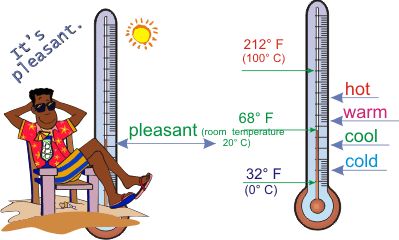
To illustrate the adjective 'pleasant' we have a man relaxing pleasantly in the sun with a thermometer showing pleasant temperatures.

Example 9

Anthony: Sunny. Mild. Not too hot. Not too cold.
📝 Mild = gentle, pleasant weather.

Example 10

Gabriella: Chilly. Windy.

Chilly: A man dressed warmly and for windy, a cloud figure blowing air.

📝 Chilly = almost cold.

Example 11

Peter: Cold and windy.

Icicles indicate it's cold.

Example 12

Lisa: Very sunny. Warm.

Just the sun shining brightly

Example 13

Stuart: Very cold. Windy. Not very nice.

Example 14

Paul: It’s raining.

A cloud releasing rain.

🔑 Key Vocabulary Recap

  • Damp = slightly wet
  • Brisk / Crisp = cool, invigorating
  • Overcast = very cloudy
  • Dull and grey = dark, rainy
  • Breezy = light wind
  • Windy = strong wind
  • Chilly = almost cold
  • Mild = pleasant, not extreme
  • Pleasant = nice, enjoyable

“What’s the weather like today where you are?”

The Verb To Be – The Basics

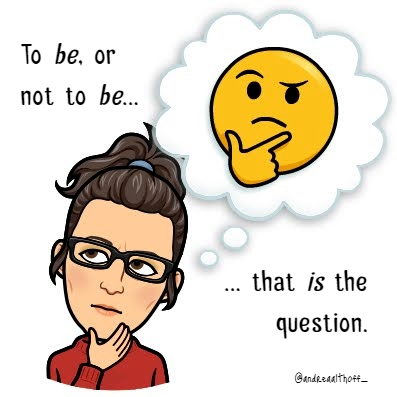
Do you know this famous line?

“To be, or not to be – that is the question.”
It’s from Shakespeare’s Hamlet.

The verb to be is one of the most important verbs in English. In this lesson, we’ll learn how to use it to talk about ourselves and other people.


👤 Talking about yourself

  • I amI’m
    This is the short form, and it’s very common in spoken English.

👉 Example:

  • Hi, I’m Fred. → Fred is introducing himself.

👥 Talking about others

  • you are → you’re
    • You’re Jennifer, right?
  • she is → she’s
    • How’s Julia? – She’s good!
  • he is → he’s
    • He’s James.
  • it is → it’s
    • It’s a bee. 🐝

📌 Use he for a man, she for a woman, and it for an object or an animal (when we don’t know or don’t need to mention gender).


👨‍👩‍👧 Talking about groups

  • we are → we’re
    • We’re friends.
  • they are → they’re
    • They’re teachers.

👉 Tip: We use they when we talk about a group of people, and also when we don’t know someone’s gender.


💡 Extra Tip

We can ask “How are you?” when talking to one person or to many people.

  • You (singular) → How are you?
  • You (plural) → How are you all? / How are you guys?

The verb are doesn’t change.


📊 Summary Table

PersonVerb “to be”Short formExample
IamI’mI’m happy.
youareyou’reYou’re my friend.
heishe’sHe’s a student.
sheisshe’sShe’s a doctor.
itisit’sIt’s cold.
wearewe’reWe’re ready.
theyarethey’reThey’re here.

🚀 For Extra Practice

👉 Practice saying these aloud:

  • Introduce yourself: “Hi, I’m …”
  • Point to a friend: “He’s … / She’s …”
  • Describe something near you: “It’s …”
  • Talk about a group: “We’re … / They’re …”

In the next step, you’ll also learn negatives (I’m not, you aren’t, she isn’t…) and questions (Am I…? Is he…? Are they…?).

✏️ Exercises – Verb To Be

1) Complete with the correct form of to be (am / is / are):

a) I ___ a student.
b) She ___ my best friend.
c) They ___ very happy today.
d) We ___ in the classroom.
e) He ___ from Brazil.


2) Rewrite using the short forms:

a) I am tired. → ____________
b) She is at the park. → ____________
c) We are ready. → ____________
d) He is my brother. → ____________
e) They are teachers. → ____________


3) Make the sentences negative:

a) I’m from Canada. → ____________
b) She’s here. → ____________
c) They’re students. → ____________
d) We’re late. → ____________
e) It’s a dog. → ____________


4) Ask questions with to be:

a) you / tired → ____________ ?
b) she / your teacher → ____________ ?
c) they / at school → ____________ ?
d) he / ready → ____________ ?
e) it / your book → ____________ ?


5) Translate into English:

a) Eu sou feliz.
b) Ela é minha amiga.
c) Nós estamos em casa.
d) Eles são médicos.
e) Está frio.

✅ Answer Key – Verb To Be

1) Complete with the correct form of to be:

a) I am a student.
b) She is my best friend.
c) They are very happy today.
d) We are in the classroom.
e) He is from Brazil.


2) Rewrite using the short forms:

a) I am tired. → I’m tired.
b) She is at the park. → She’s at the park.
c) We are ready. → We’re ready.
d) He is my brother. → He’s my brother.
e) They are teachers. → They’re teachers.


3) Make the sentences negative:

a) I’m from Canada. → I’m not from Canada.
b) She’s here. → She isn’t here. / She’s not here.
c) They’re students. → They aren’t students. / They’re not students.
d) We’re late. → We aren’t late. / We’re not late.
e) It’s a dog. → It isn’t a dog. / It’s not a dog.


4) Ask questions with to be:

a) you / tired → Are you tired?
b) she / your teacher → Is she your teacher?
c) they / at school → Are they at school?
d) he / ready → Is he ready?
e) it / your book → Is it your book?


5) Translate into English:

a) Eu sou feliz. → I’m happy.
b) Ela é minha amiga. → She’s my friend.
c) Nós estamos em casa. → We’re at home.
d) Eles são médicos. → They’re doctors.
e) Está frio. → It’s cold.

Now test how well you can use the verb to be.

How to Pronounce “WORLD” (American English)

How to Pronounce 'world'.

Many English learners struggle to pronounce the word “world” — and for good reason! It contains two tricky consonant sounds: R and L, right next to each other.

👂 In American English, the pronunciation can feel especially challenging.

🧠 A Brilliant Tip from a 12-Year-Old

One of my former students, Rodrigo (only 12 years old at the time!), came up with a smart way to break it down:

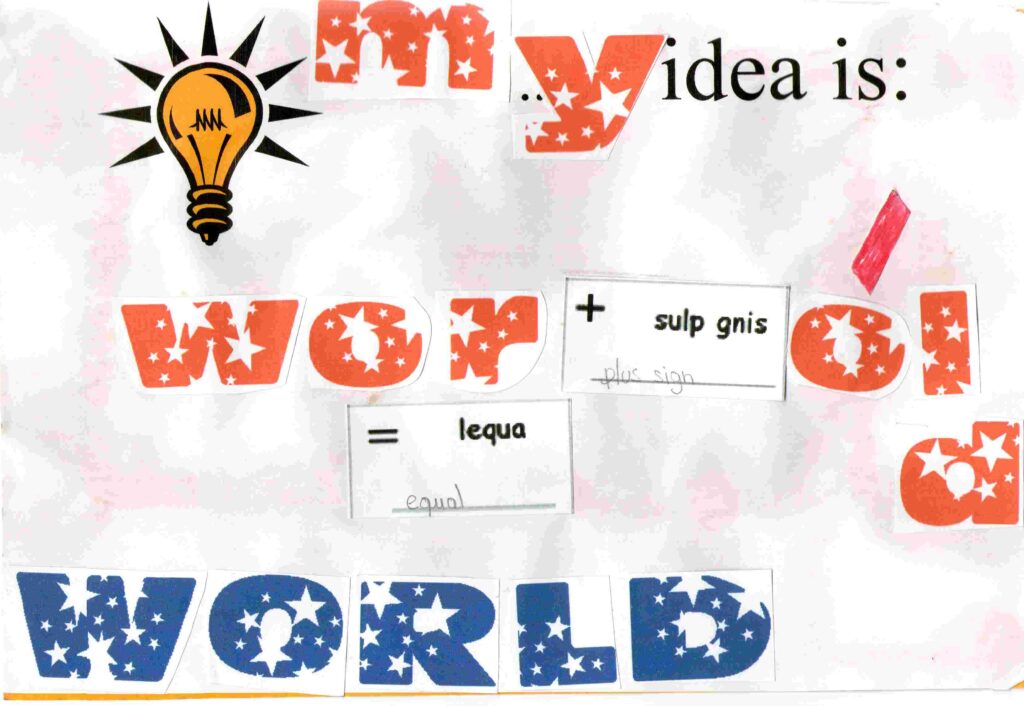
➡️ wor + óld
Think of it as two parts:

  • “wor” (as in word)
  • “óld” (like the word old)
    Put them together: wor-óldworld
    🎉 Ingenious, right? Way to go, Rodrigo!

🎥 A Similar Tip from a Teacher

While preparing this lesson, I came across a video where another teacher gives a very similar tip. Listen carefully.

🗣️ Pronunciation Practice

Repeat each pair of words slowly, focusing on the R and L sounds. Then say “world” after each one:

  1. word – old – world
  2. were – gold – world
  3. worm – cold – world
  4. war – fold – world
  5. work – hold – world

Now try saying “world” 5 times in a row, slowly and clearly.
Finally, say these full sentences:

  • 🌍 The world is beautiful.
  • 🌎 I want to travel around the world.
  • 🌐 English is spoken all over the world.

“More Five Minutes?” Not Quite! Learn the Right Word Order in English

“Teacher, I need more five minutes.”

A lot of English learners say that to me.

I get it — they’re thinking in Portuguese, where we say “mais cinco minutos.”
But in English, the word order is different.

Let’s fix it:
more five minutes → ❌ wrong
five more minutes → ✅ right!

📚 Why?

Because “more” is a modifier — a word that gives additional information about another word.
In this case, it modifies the noun (minutes), and it must come after the number.

➡️ In English, the correct structure is:

👉 number + more + noun

  • I need ten more minutes.
  • She bought two more books.
  • We’ll wait five more days.

🆚 “Five more minutes” or “Five minutes more”?

Both are grammatically correct, but there’s a difference in tone. Let’s compare:

Five more minutes (most common, especially in conversation)

– Most common – standard form for everyday English
– Natural in everyday conversation
– Neutral tone

Example:
Can I have five more minutes, please?

Five minutes more (less common, more literary or dramatic)

– Less common
– More poetic, dramatic, or old-fashioned
– Often used in songs or literature

Example:
Just five minutes more — let the world wait while I gather my thoughts.


🎧 Practice Time!

1. Complete with the correct word order:

a) I need ______ to finish this book.
(more / five / minutes)

b) She bought ______ for the trip.
(bottles / more / two)

c) We waited ______, but he never came.
(more / ten / minutes)

d) He asked for ______ to explain.
(one / more / chance)

e) And then she whispered: “Give me ______, just to say goodbye.”
(more / five / minutes)


2. Identify the correct sentence:

a)
( ) I’ll need more five hours.
( ) I’ll need five more hours.

b)
( ) She read two more pages.
( ) She read more two pages.

c)
( ) We’ll stay more three days.
( ) We’ll stay three more days.

d)
( )Five minutes more, and he would’ve seen the sunrise.
( ) More five minutes, and he would’ve seen the sunrise.


3. Translate to English using the correct structure:

a) Eu preciso de mais cinco minutos.

b) Ele ficou mais três dias no hotel.

c) Podemos esperar mais dois minutos?

d) Ela pediu apenas mais um minuto de silêncio.

e) Mais cinco minutos e tudo teria sido diferente.


4. Fix the sentence (rewrite it correctly):

a) I want more ten minutes.

b) She needs more two books.

c) Can I have more one chance?

d) Just more five seconds and we would have kissed.


5. Creative Writing Prompt ✍️

Complete the sentence using your imagination and the structure “___ more ” or “ minutes more”:

a) Five minutes more and…
(Exemplo: Five minutes more and the storm would’ve passed.)

b) One more chance to…

c) He needed just a few more…

d) Ten more steps and…

Answers:

Exercise 1: a. five more minutes; b. two more bottles; c. ten more minutes; d. ten more minutes; e. five more minutes

Exercise 2: a. (✔) I’ll need five more hours./ b. (✔) She read two more pages. / c. (✔) We’ll stay three more days. / d. (✔) Five minutes more, and he would’ve seen the sunrise.

Exercise 3: a. I need five more minutes. / b. He stayed three more days at the hotel. / c. Can we wait two more minutes? / d. She asked for just one more minute of silence. / e. Five minutes more and everything would have been different.

Exercise 4: a. I want ten more minutes. / b. She needs two more books. / c. Can I have one more chance? / 4. Just five more seconds and we would have kissed.

🎧 Now Fun Time!

Listen carefully to this classic Phil Collins song from 1984
and work on the lyrics by playing this fun game: https://lyricstraining.com/play/phil-collins/one-more-night

To Downtown or Not to Downtown?

Understanding How to Use “Downtown” in English

Recently, a student was describing his weekend and said:
“We went to downtown to visit.”

Hmm… something’s not quite right.
Can we say that?

This little sentence inspired me to dig deeper into how “downtown” is used in American and British English — and the results were interesting!


🇺🇸 American vs. 🇬🇧 British English

The word “downtown” is commonly used in American English, but much less in British English. In fact, its use and grammatical role change depending on the variety of English and the context.


🧠 In American English, “downtown” is often used as:

🔹 An adverb (no preposition needed!)

Meaning: to or in the central part of a city

Examples:

  • I’m going downtown now.
  • She works downtown, but lives in the suburbs.
  • We were stuck downtown in traffic.

✅ So instead of saying:
“We went to downtown to visit.”
You should say:
“We went downtown to visit.”

“Downtown” as an adverb does not need the preposition “to.”


🔹 An adjective (used before a noun)

Meaning: related to the central business district

Examples:

  • A downtown hotel
  • Downtown Los Angeles
  • A downtown office building

Used this way, “downtown” describes where something is.


🏙️ In British English…

British speakers are more likely to say:

  • “the city centre” or
  • “the town centre”

Example:

  • We went to the city centre to visit a museum.

They tend to use “downtown” only as a noun, and even that is rare or used in specific contexts.


🔹 As a noun

Meaning: the central part of a city

Examples:

  • There’s a nice hotel in the heart of downtown.
  • We walked around downtown for hours.
  • The restaurant is two blocks from downtown.

Note: In this case, you can use a preposition like “in” or “from”, depending on the verb.


❗ So, what’s is the most important point to remember?

If you’re speaking American English, don’t say “to downtown.”
Instead, say:
“We went downtown.”

Unless you’re using “downtown” as a noun (less common), which would allow for:
“We went to the downtown area.”
“We stayed in downtown.”

👉 Watch this short video explanation:


✍️ Try it yourself!

✅ Decide if the sentence is Correct or Incorrect — and if incorrect, fix it:

  1. We had lunch downtown.
  2. She went to downtown.
  3. I love downtown cafés.
  4. They moved downtown last year.
  5. He works in a downtown office.
  6. We explored the downtown.

Check your answers at the end!


💬 Creative Practice (Bonus)

Write a short paragraph or dialogue using at least three of these expressions:

  • go downtown
  • downtown store
  • live downtown
  • downtown traffic
  • the heart of downtown

✅ Answers (Correct or Incorrect):

  1. Correct
  2. Incorrect → Correct: She went downtown.
  3. Correct
  4. Correct
  5. Correct
  6. Correct — In American English, “the downtown” is acceptable when “downtown” is used as a noun, e.g., “We explored the downtown (area).”

💡 For a more natural version of sentence 6, you could also say:
“We explored downtown.”

🗺️ So how do we say that we went to visit a new city and wanted to see its downtown?

There are a few natural ways to say this in English, depending on how “downtown” is used:

  • “We went downtown to visit.” (adverb)
  • “We drove downtown to visit.” (adverb)
  • “We went to downtown Luiz Alves to visit.” (adjective – modifying a proper noun)
  • “We went to visit the downtown of the city.” (noun)

Each version is grammatically correct — just remember the structure depends on how “downtown” is functioning in the sentence.