Qual é o erro mais marcante dos brasileiros ao falar inglês?
É a falta do objeto “it” após love e eat!
Confira a partir de 4.16 min no vídeo.


Qual é o erro mais marcante dos brasileiros ao falar inglês?
É a falta do objeto “it” após love e eat!
Confira a partir de 4.16 min no vídeo.
Ontem vimos como usar say e tell. Hoje vamos praticar.
Ok guys, let’s practice:
1. He __________ he didn’t care about that job anymore.
a) said b) told
2. I forgot to __________ happy birthday to her.
a) say b) tell
3. What did you __________ the boss?
a) say b) tell
4. He couldn’t help me. He __________ to ask Robert.
a) said b) told
5. My mom __________ that I had to find a new girlfriend.
a) said b) told
6. She __________ him to stop following them.
a) said b) told
7. Don’t __________ anybody.
a) say b) tell
8. I __________: ”I can’t stay here anymore.”
a) said b) told
9. Hey, why didn’t you __________ her the truth?
a) say b) tell
10. The doctor __________ that there’s nothing wrong with me.
a) said b) told
11. Excuse me, can you __________ me the time?
a) say b) tell
There you go guys!
Respostas: 1a; 2a; 3b; 4a; 5a; 6b; 7b; 8a; 9b; 10a; 11b
https://blog.influx.com.br/exercicio-de-ingles-quando-usamos-say-e-tell
Alguns aprendizes da língua inglesa, estão precisando rever isto! So here it goes!
Quando queremos dizer que alguém falou ou disse algo, podemos usar dois verbos: say e tell. Esses verbos,
têm significado semelhante, mas não são iguais.
O verbo tell é utilizado quando os dois participantes da conversa estão incluídos. Então, you
TELL SOMEBODY SOMETHING
Mary told me she was in the hospital. [A Mary me disse que ela estava no hospital.]
He told me (that) he was tired. [Ele me disse que estava cansado.]
Tell me what’s going on! [Me diga o que está acontecendo!]
Já o verbo say, apresenta apenas um participante da conversa. You
SAY SOMETHING
Mary said (that) she was in the hospital. [A Mary disse que ela estava no hospital.]
He said (that) he was tired. [Ele falou que estava cansado.]
She said (that) blue is her favorite color. [Ela disse que azul é a cor favorita dela.]

No entanto, podemos incluir os dois participantes da conversa, se usarmos say to. Então you
SAY SOMETHING TO SOMEBODY
That’s what I said to him. [Foi isso que eu disse a ele.]

De qualquer maneira, o verbo tell é muito mais comum nessas situações do que o say to.
Também usamos o tell quando nos referimos a “contar uma história” [tell a story], “contar uma piada” [tell a joke], “contar uma mentira”,[tell a lie], “contar a verdade” [tell the truth], “contar um segredo” [tell a secret].
Grandpa always tells us his stories. [O vovô sempre nos conta suas histórias.]
Tell him the truth. [Conte a verdade a ele.]
I’m going to tell you a joke. [Vou te contar uma piada.]
Got it? So tell me if you got it and check tomorrow’s Blog post for exercises!
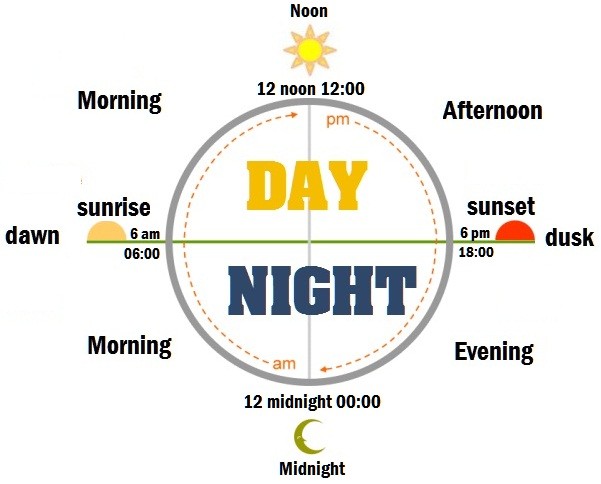
Evening is the time when the sky starts to get dark – usually around 6-8 PM.
Night is the time when it is dark and people are generally sleeping.
Say “Good evening” to say “hello” after 6:00 PM. “Good evening” is commonly used at restaurants, in a professional context, and in speeches (when you speak in front of a large number of people):
In general, “good evening” is a little more formal. Friends don’t normally say “good evening” to each other – they would say “Hi”, “What’s up?” or another informal greeting.
Say “Good night” to say “goodbye” – when you are leaving to go home. Family members also say “good night” when they are going to bed.

Veja os exemplos abaixo extraídos, da abertura e do encerramento de dois programas de televisão.

Merry Christmas!


