How far is it?

Hi everyone! We’ve already worked on these two interrogative expressions: How far and How long.

Now we’re going expand on the usage of how far.

Vimos que a expressão how far é usada para perguntar ou falar sobre a distância entre dois lugares. Mas também é utilizada com o sentido de perguntar ou falar sobre a extensão de alguma coisa, lugar ou situação. Assim, ela pode ser entendida como qual a distância?até que ponto?até onde?.

Observe a seguir.

  • How far is your house from here? [Qual é a distância da sua casa daqui?]
  • How far is it to the next gas station? [Qual é a distância até o próximo posto de gasolina?]
  • How far is it (from here) to the station, please? [Qual é a distância (daqui) até a estação, por favor?]
  • How far can you go on one tank of gas? [Qual é a distância que você consegue percorrer com um tanque de gasolina?]
  • I don’t know how far we can go. [Eu não sei até onde podemos chegar.]
  • How far do you agree with the following statements about child development and learning? [Até que ponto você concorda com as declarações seguintes sobre desenvolvimento infantil e aprendizado?]
  • I didn’t know how far to believe them. [Eu não sabia até que ponto acreditar neles.]
  • How far can we trust him? [Até que ponto podemos confiar nele?]
  • She didn’t know how far to trust him. [Ela não sabia até que ponto confiar nele.]
  • He can be trusted, but how far? [Ele é de confiança, mas até que ponto?]

It is possible to structure your thoughts in a couple of different ways. The context, the whole conversation has to be taken into account in order for your choice to make sense.

Well, I hope this could be of some help to you! Bons estudos!

Adapted from https://www.englishexperts.com.br/forum/how-far-significado-e-como-utilizar-t60086.html

“How far” and “how long”

We use how far to talk about distance.

How far is our classroom from the washroom? It’s about 30 metres.

We use how long to talk about the amount of time something takes.

How long is the movie? It’s 2 hours.

Remember, when you make a question with a verb other than the be verb, you need to use an auxiliary verb (do/did, have/had, will, are/is, etc). For example:

How far do you usually walk? I walk 5 kilometres.  (Present Simple)

How long did you wait? I waited 30 minutes. (Past Simple)

How far will you drive? (Future Simple)

How long have you been living in Canada? (Present Perfect Continuous)

Now let’s practice! Complete with the correct question word – how long or how far.

1 ____________________ is New York from Los Angeles?

New York is about 2,900 miles from Los Angeles.

2 ____________________ does she usually spend in traffic?

She usually spends 2 hours in traffic.

3 ____________________ is Melbourne from Paris?

Melbourne is 12,249 miles far from Paris.

4 ____________________did he play tennis?

He played tennis for 30 minutes.

5 ____________________do you usually stretch in the morning?

I usually stretch for 10 minutes.

6 ____________________far ​is the bus stop?

The bus stop is 200 meters away.

Now make questions to match the answers.

1.A:___________________________________ ? B: I slept for six hours.

2. A:____________________________________ ? B: I have been working at my company for two years.

3. A:_____________________________________? B: I rode my bicycle for 5 miles.

4. A:__________________________________ ? B: My house is 15 kilometres from my work.

5. A:_________________________________ ? B: Kate waited an hour for the bus.

6. A:__________________________________ ? B: The lessons are 20 minutes.

7. A:____________________________________ ? B: I had to stand for 30 minutes.

How Long for Physical Length

We can also use How long to talk about the physical length of something, e.g. your hair or a river. 

How long is the Nile river? How long was the line?

In these questions, we are asking about length. This is the regular meaning of the word long.

For the answers, please click here.

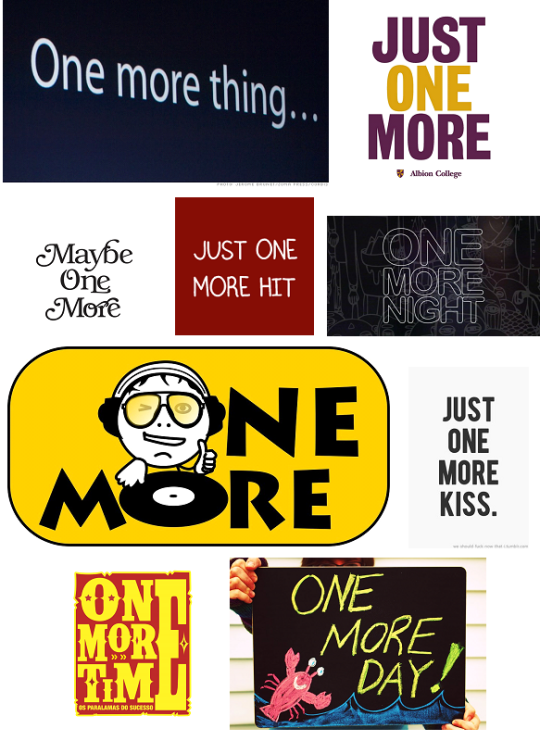
In Portuguese: “mais uma vez”. What about in English?

Quando estudamos uma nova língua, inevitavelmente a comparamos à nossa. Mas há inúmeros casos em que a simples troca de vocábulos do português para o inglês, não se aplica, sendo essa, uma abordagem nociva. E um equivoco recorrente entre os alunos, é quando querem dizer: mais um dia, mais uma vez, mais uma música, etc. A ordem das palavras no inglês é: one more day, one more time, one more song.

image

Got it? Now listen to One More Night from Phil Collins…

…and most importantly, practice here.

Nouns in groups

Hi everyone! I put together this post to answer a student’s question! Hehe… Do we say Gloria Hotel Accommodations?

There are three main ways in which we can put nouns together so that the first noun modifies or describes the second.

noun + noun

Mostly used to make ‘classifying’ expressions, which name a particular kind of thing. The first noun works a little like an adjective.

a horse race / a war film / milk chocolate

The noun + noun structure is also used in measurements, with a number before the first noun. The number is usually joined to the first noun by a hyphen (-). Note that the first noun is normally singular in form in these cases.

a three-day weekend / a ten-pound note / a two-hour lesson

noun + ‘s + noun

Used to talk about several different sorts of ideas: possession, relationship, physical features and characteristics, non-physical qualities and measurements of a person or animal, or of a country, organization or other group of living creatures.

my sister’s car / a bird’s nest / cow’s milk

noun + preposition + noun

Used to talk about parts of non-living things and in other cases.

the top of the page / a feeling of disappointment

This is a very complicated area of English grammar. The ‘rules’ given above show the general patterns, but unfortunately there is no easy way to be quite sure which structure is used to express a particular compound idea. The most common expressions will be learnt by experience; in cases of doubt, a good dictionary will often show which form is correct.

By the way, hotel accommodation means the facilities and the quality of accommodation provided by a hotel:
This includes hotel accommodation, meals and bike hire
. Times, Sunday Times (2008)

I hope you will find this information helpful! 😉

Practical English Usage – Michael Swan