
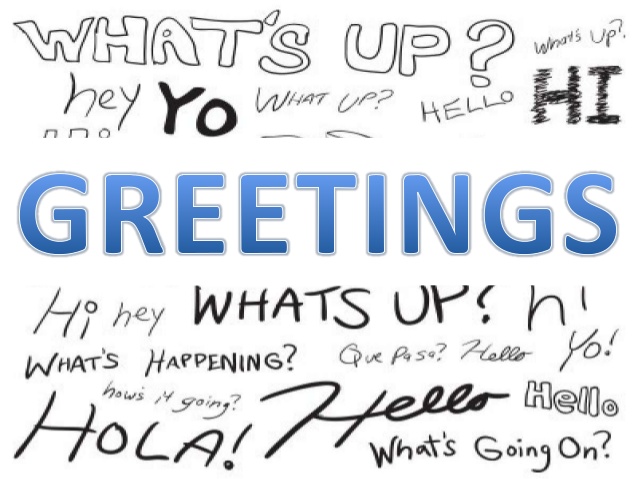
🗣️ Greeting People
We usually greet people with “hi” or “hello.”
👉 “Hi” is a bit more casual.

Examples:
- Hello!
- Hi!
- Hey!
It’s common to say “hey” in informal situations.
Be aware that “hey” can also be used to get someone’s attention, like:
Hey, look at this!
😊 Asking How Someone Is
Common ways to ask how someone is doing:
- How are you?
- How are you doing?
- How’s it going?
- How have you been?
All these questions have similar meanings.
👍 Common Replies

- I’m fine, thanks.
- I’m good, thanks.
- I’m great, thanks!
- Pretty good!
- Not bad, thanks.
👉 Many people say “not bad” to mean “quite good.”
👋 Informal Greetings Among Friends
If you’re greeting a friend or someone you know well, you can say:

- Hey, what’s up?
- What’s new?
- What’s happening?
- What’s going on?
Typical short replies:
- Nothing.
- Not much.
- Nothing much.
💡 In English-speaking cultures, people usually don’t share a lot of personal information during a short, informal, or accidental meeting.
🎧 Listening Practice
Listen carefully to the two videos below.
Take notes of useful phrases and sentences, and pay special attention to pronunciation.
🌞 Other Everyday Greetings

- How’s everything?
- Long time no see. Hey, long time no see!
- How’s your day?
- Good morning / Good afternoon / Good evening
👉 To make “Good morning” less formal, just say “Morning.”
If you’re leaving or going to sleep, you can also say “Good night.”
🚪 Saying Goodbye
- Bye! → (short for “Goodbye”)
- See ya / See you soon / Hope to see you soon Used when you plan to meet the person again soon.
- Take it easy / Take care / Take care of yourself. These phrases are informal, polite, and friendly ways to say goodbye, wishing the other person well.