
Neste final de semana, haverá um feriadão, ou seja, será um fim de semana prolongado. Você sabe como dizer feriado prolongado em inglês?
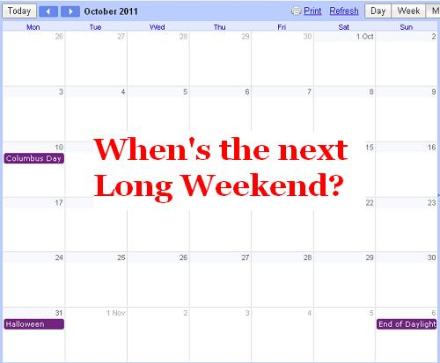
Sempre que um feriado cai próximo ao final de semana e algumas empresas ou escolas fazem um recesso na quinta e sexta, ou segunda e terça, chamamos em inglês de long weekend.
Você pode dizer, a three-day weekend, quando o feriado é na sexta ou na segunda, ou four-day weekend, se o feriado é na quinta, com recesso na sexta, ou na terça, com recesso na segunda.
Note que o numeral é usualmente unido ao primeiro substantivo por um hífen, e que nesses casos, esse primeiro substantivo normalmente permanece no singular (não three-days weekend, four-days weekend).
No inglês britânico o termo mais comum, que corresponde a feriado prolongado é bank holiday weekend.
E algumas das perguntas mais comuns antes de um feriado prolongado são: Como será seu feriado? Com você passará o feriado? O que você fará neste feriado?
- How is your long weekend going to be?
- How are you going to spend your four-day weekend?
- Where are you going to spend your long weekend?
- What are you going to do this long weekend?
Agora que tal usar estas perguntas juntamente com o vocabulário para este feriado?
Complete as frases com as palavras ou expressões que faltam:
1- Friday is a _________. It’s _______________.
(Sexta-feira é feriado. É Sexta-feira Santa)
2- It’ll be _________________________.
(Será um feriado de três dias.)
3- I love __________________________.
(Eu amo o feriado de Páscoa.)
4- Is Easter a ____________________ holiday?
(A Páscoa é um feriado religioso?)
5- Next long weekend, Proclamation of the Republic,________________ a Friday.
(O próximo feriado prolongado, Proclamação da república, cai em uma sexta-feira.)
6- I’m in a _________________________.
(Estou em clima de feriado.)
7- We’ll _______________ the holiday at home.
(Vamos passar o feriado em casa.)
Agora confira suas respostas!
1 –holiday; 2 – a three-day weekend; 3 – Easter holiday; 4 – religious; 5- falls on; 6 – holiday mood; 7 –
Quer ver mais sobre feriados? Clique aqui.
Enjoy your long weekend!
https://blog.influx.com.br/como-se-diz-feriado-prolongado-em-ingles
https://blog.influx.com.br/exercicio-de-pascoa-e-feriados-em-ingles