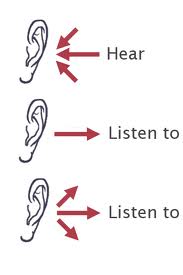
Listen or hear? Do you know which word to use? These verbs may seem the same, but we use them differently in English.
To listen, is quite an active thing. You’re really concentrating when you’re listening to a piece of music, really thinking about it as you’re listening.
To hear is a little bit more passive. You sort of receive the soundwaves into your ears, whether you decide to or not.
Now beware of the pronunciation of the word listen! It has a silent T!
Alguns aprendizes da língua inglesa, estão precisando rever isto! So here it goes!
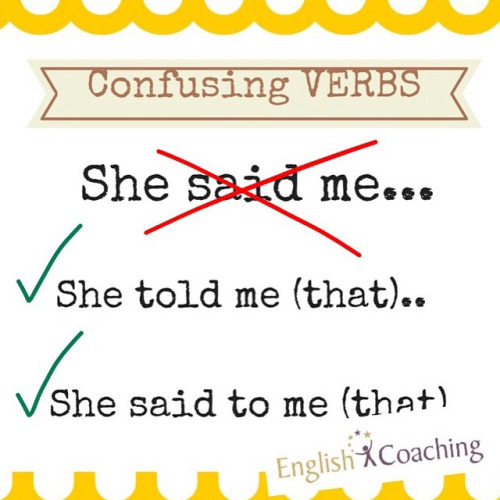
Quando queremos dizer que alguém falou ou disse algo, podemos usar dois verbos: say e tell. Esses verbos, têm significado semelhante, mas não são iguais.
O verbo tell é utilizado quando os dois participantes da conversa estão incluídos. Então, you
TELL SOMEBODY SOMETHING
Mary told me she was in the hospital. [A Mary me disse que ela estava no hospital.]
He told me (that) he was tired. [Ele me disse que estava cansado.] Tell me what’s going on! [Me diga o que está acontecendo!]
Já o verbo say, apresenta apenas um participante da conversa. You
SAY SOMETHING
Mary said (that) she was in the hospital. [A Mary disse que ela estava no hospital.]
He said (that) he was tired. [Ele falou que estava cansado.]
She said (that) blue is her favorite color. [Ela disse que azul é a cor favorita dela.]
No entanto, podemos incluir os dois participantes da conversa, se usarmos say to. Então you
SAY SOMETHING TO SOMEBODY
That’s what I said to him. [Foi isso que eu disse a ele.]
De qualquer maneira, o verbo tell é muito mais comum nessas situações do que o say to.
Também usamos o tell quando nos referimos a “contar uma história” [tell a story], “contar uma piada” [tell a joke], “contar uma mentira”,[tell a lie], “contar a verdade” [tell the truth], “contar um segredo” [tell a secret].
Grandpa always tells us his stories. [O vovô sempre nos conta suas histórias.]
Tell him the truth. [Conte a verdade a ele.]
I’m going to tell you a joke. [Vou te contar uma piada.]
Got it? So tell me if you got it and check tomorrow’s Blog post for exercises!
O horário de verão, é chamado daylight saving time (nos EUA) ou summer time (no Reino Unido). Quando começa, você turn/move/set clocks forward/ahead (relógios são adiantados), e quando termina, você set/move/turn clocks back (relógios são atrasados).